

In astrophotography, Springtime means galaxies! When the Milky Way and its colorful nebulae are hidden below the horizon, galaxies and star clusters outside our home galaxy rise above. Learn astrophotography basics, charge your batteries, set up your telescope, and discover what there to photograph in the night sky during March, April, and May, the so-called Spring galaxy season in astronomy and astrophotography community — P.S Looking for more beginner-friendly astrophotography targets? Check out my free astrophotography ebook.
Jump to:
- General Tips for Photographing Spring Galaxies and Star Clusters
- 1. Leo Triplet - M65, M66, and NGC 3628 (Sarah's/Hamburger Galaxy)
- 2. Markarian's Chain - M84, M86, NGC 4438, NGC 4435, and more
- 3. Pinwheel Galaxy (M101) - my personal Spring favorite
- 4. Sombrero Galaxy (M104)
- 5. Bode and Cigar Galaxies (M81 & M82)
- 6. M3/NGC 5272 Star Cluster - the Spring cluster king
- 7. Whirlpool Galaxy (M51)
- 💬 Comments
General Tips for Photographing Spring Galaxies and Star Clusters
Get proper astrophotography gear. Use rather a telescope, not a telephoto lens.
Those targets are tiny, and 100mm or 200mm focal length may be too short for them. A majority of pictures here were taken with my Sky-Watcher Evostar 72ED (420mm focal length).
Check best beginner astrophotography telescopes.
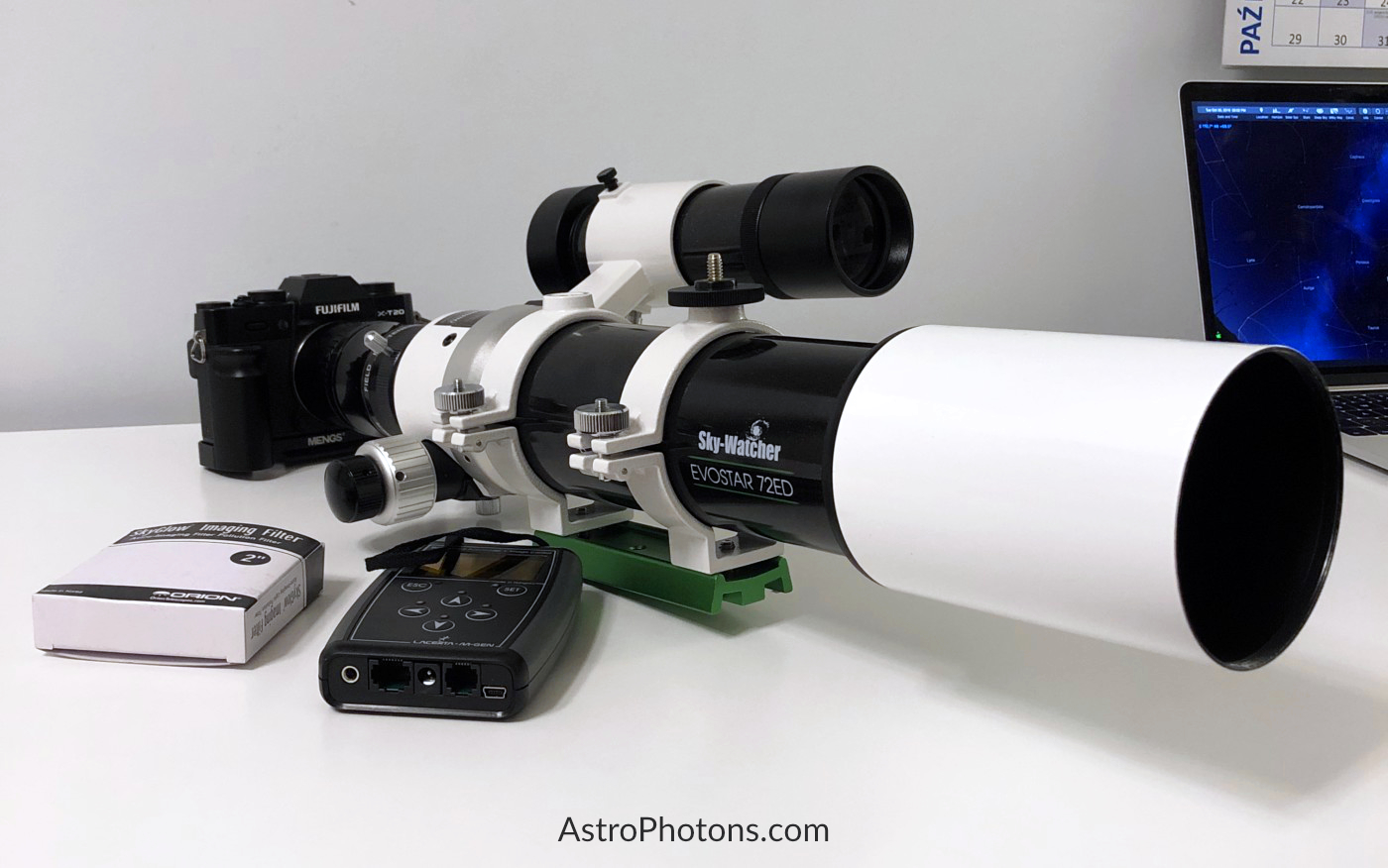
Polar alignment, focus, and tracking accuracy are critical. Especially during the galaxy season (Spring).
Spring galaxies and star clusters have smaller apparent sizes on the night sky than Winter or Summer nebulae. One pixel of galaxy data represents more than one pixel of some bigger nebula.
Keep your eye on the histogram.
Some of the targets are really bright, so don't overexpose your pictures, especially when using f/2.8 or faster lenses.
When post-processing, play with saturation sliders.
I was surprised how much color is there in the M3 or Sombrero Galaxy when I photographed them for the first time.
Use range masks and curves.
If you use PixInsight (as you should be doing for best effects), use range masks and curves processes to dim backgrounds and brighten galaxies to make them really pop and stand out. Also, you can selectively increase or decrease saturation using the ColorSaturation process. I use to decrease it on backgrounds and increase interesting wavelengths on objects.
Get the proper clothes. Spring is not the same as Summer.
The weather in Spring is nice, but don't forget to get clothed properly. Nights are colder.
1. Leo Triplet - M65, M66, and NGC 3628 (Sarah's/Hamburger Galaxy)
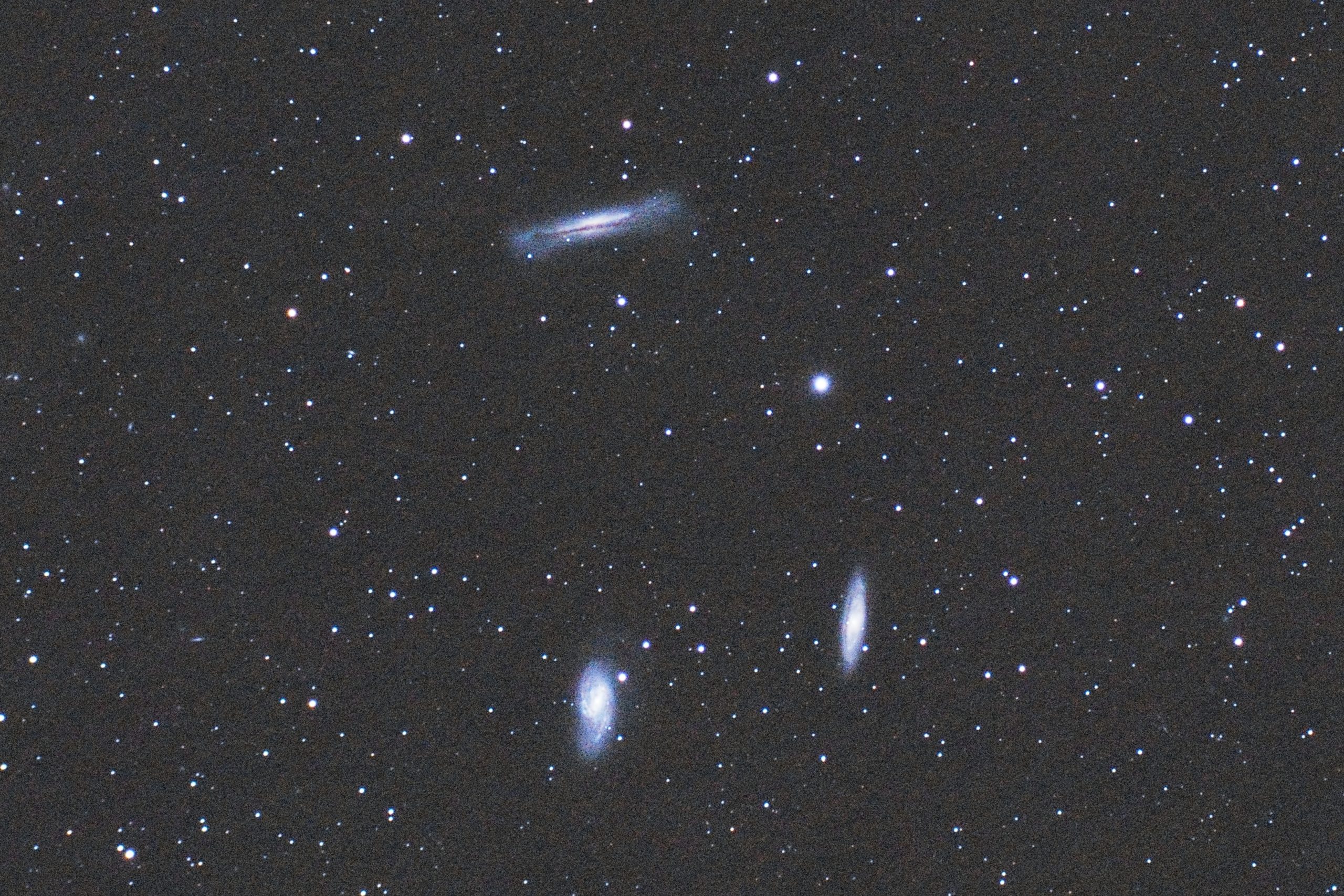
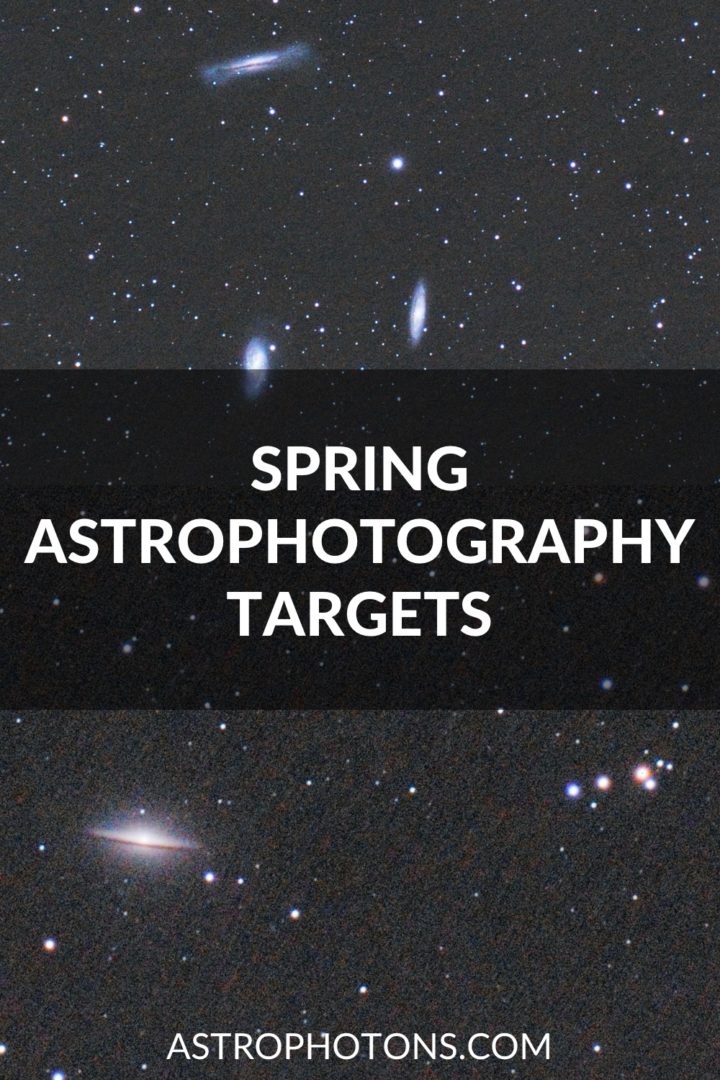
Leo Triplet is one of the most often photographed groups of galaxies at the beginning of every year. The three galaxies that form the Triplet - M65, M66, and NGC 3628 - are located in the Leo constellation, very close to the ecliptic. That makes them easy to find in the night sky, no need for a GoTo mount. Locate Chertan star, and you are ready to go.
| Object | Leo Triplet |
| Object type | Group of galaxies (3-5) |
| Other names | M65, M66, NGC 3628 |
| Constellation | Leo |
| RA (right ascension) | 11h 17m |
| DEC (declination) | +13° 25′ |
| Brightest magnitude | 8.9 |
| Size | Around 36 × 53 arcmins |
2. Markarian's Chain - M84, M86, NGC 4438, NGC 4435, and more
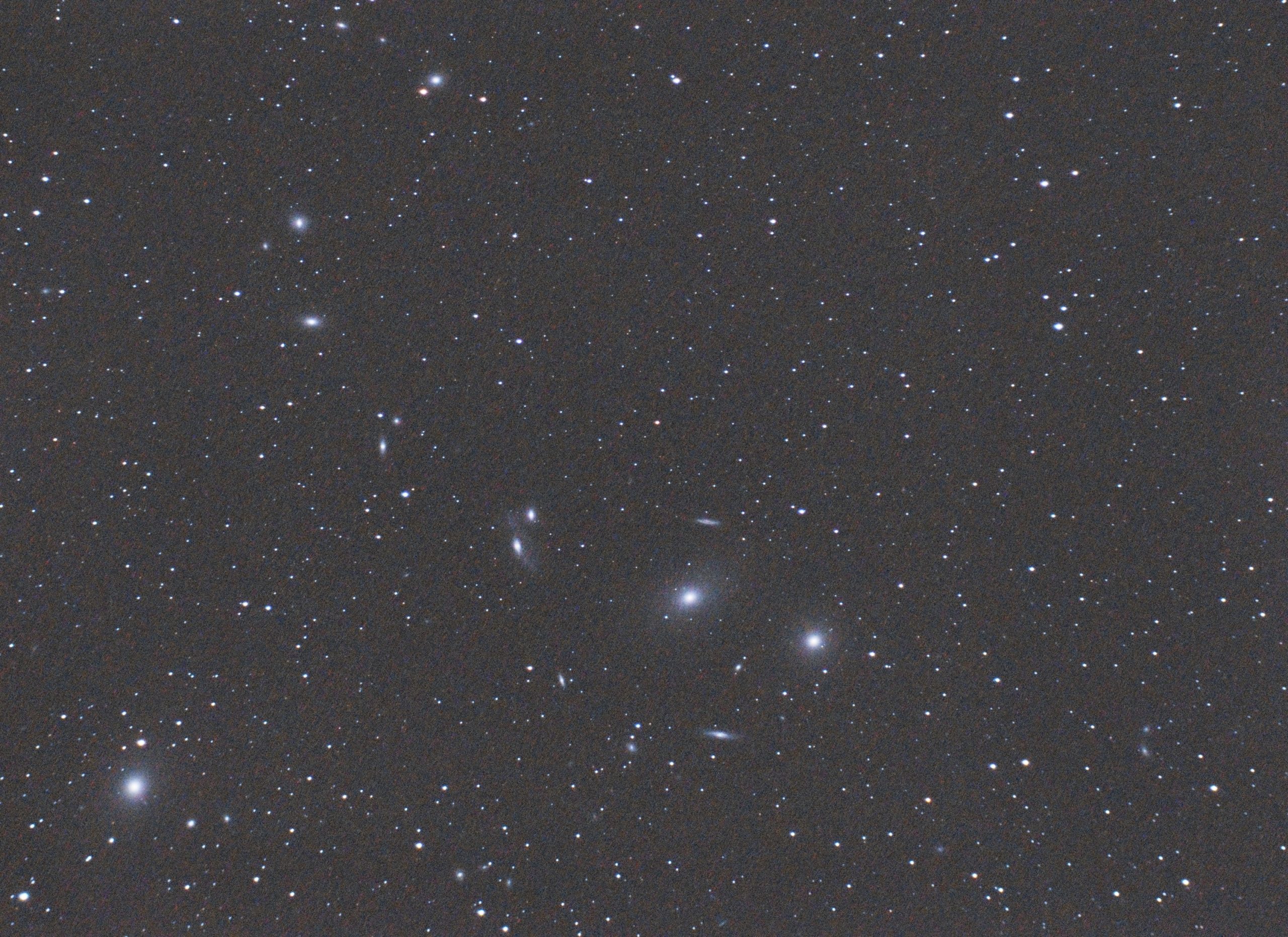
Markarian's Chain is a large group of galaxies located on the border between two constellations - Virgo and Coma Berenices. A popular Spring astrophotography target among beginner astrophotographers. Not as colorful as some other Spring targets, but still worth your exposure time.
| Object | Markarian's Chain |
| Object type | Group of galaxies (8-10) |
| Other names | M65, M66, NGC 3628 |
| Constellation | Virgo and Coma Berenices |
| RA (right ascension) | 12h 27m |
| DEC (declination) | +13° 10′ |
| Brightest magnitude | 9.0 |
| Size | Around 49 × 68 arcmins |
3. Pinwheel Galaxy (M101) - my personal Spring favorite
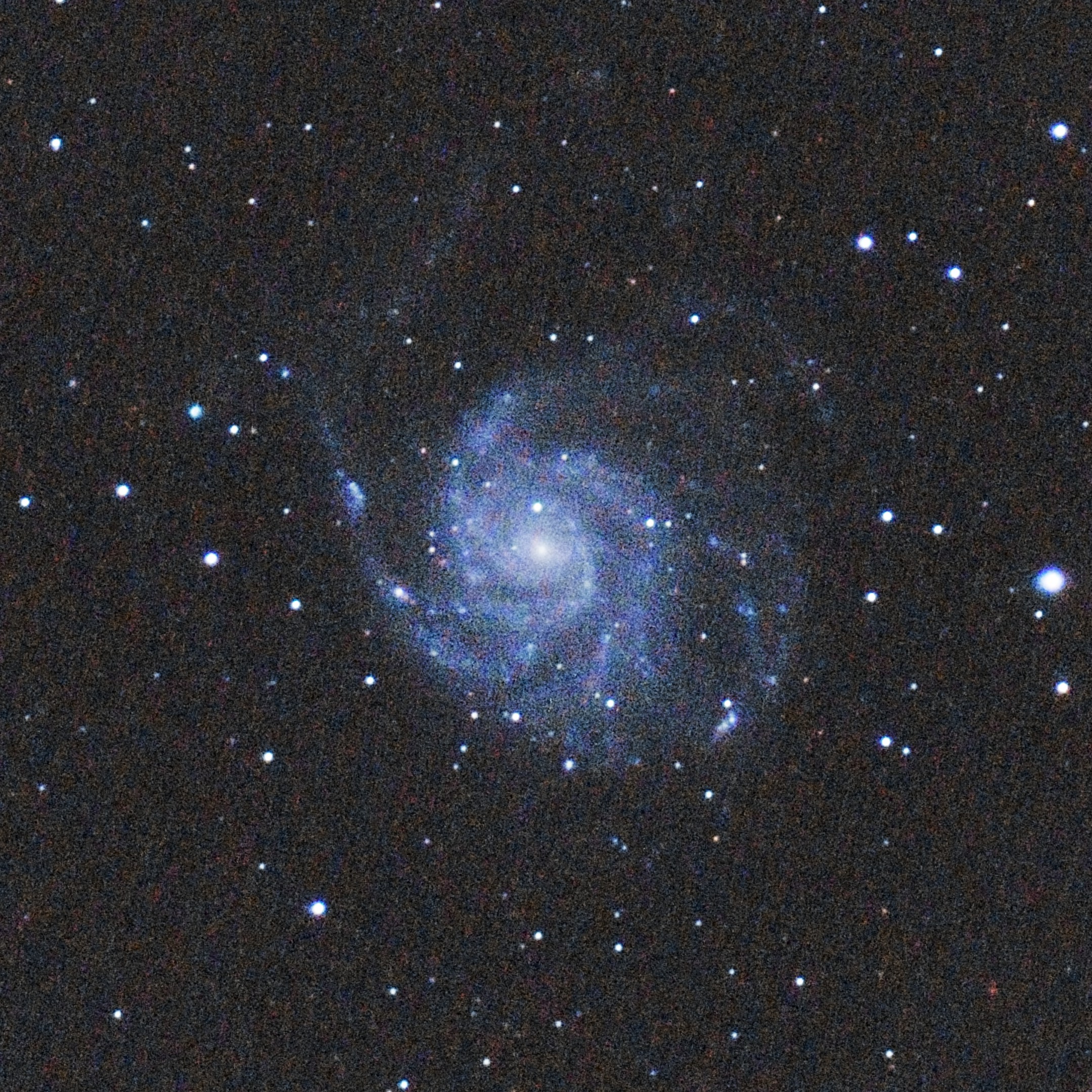
Pinwheel Galaxy is a spiral galaxy located in the Ursa Major constellation, close to the Polaris. Due to this, it's high in the sky, making it a fantastic target for every astrophotographer. Yet it's not very bright, so you have to do a lot of long exposures to get some details of this galaxy. Dark skies are recommended for the M101, although my picture above was taken from my balcony, near a small city center.
If you have an H-alpha filter, use it for this target. There is some significant red signal coming from this galaxy worth adding to your final image.
| Object | Pinwheel Galaxy |
| Object type | Face-on spiral galaxy |
| Other names | M101, Messier 101 |
| Constellation | Ursa Major |
| RA (right ascension) | 14h 03m 12.6s |
| DEC (declination) | +54° 20′ 57″ |
| Magnitude | 7.9 |
| Size | 29 × 27 arcmins |
4. Sombrero Galaxy (M104)
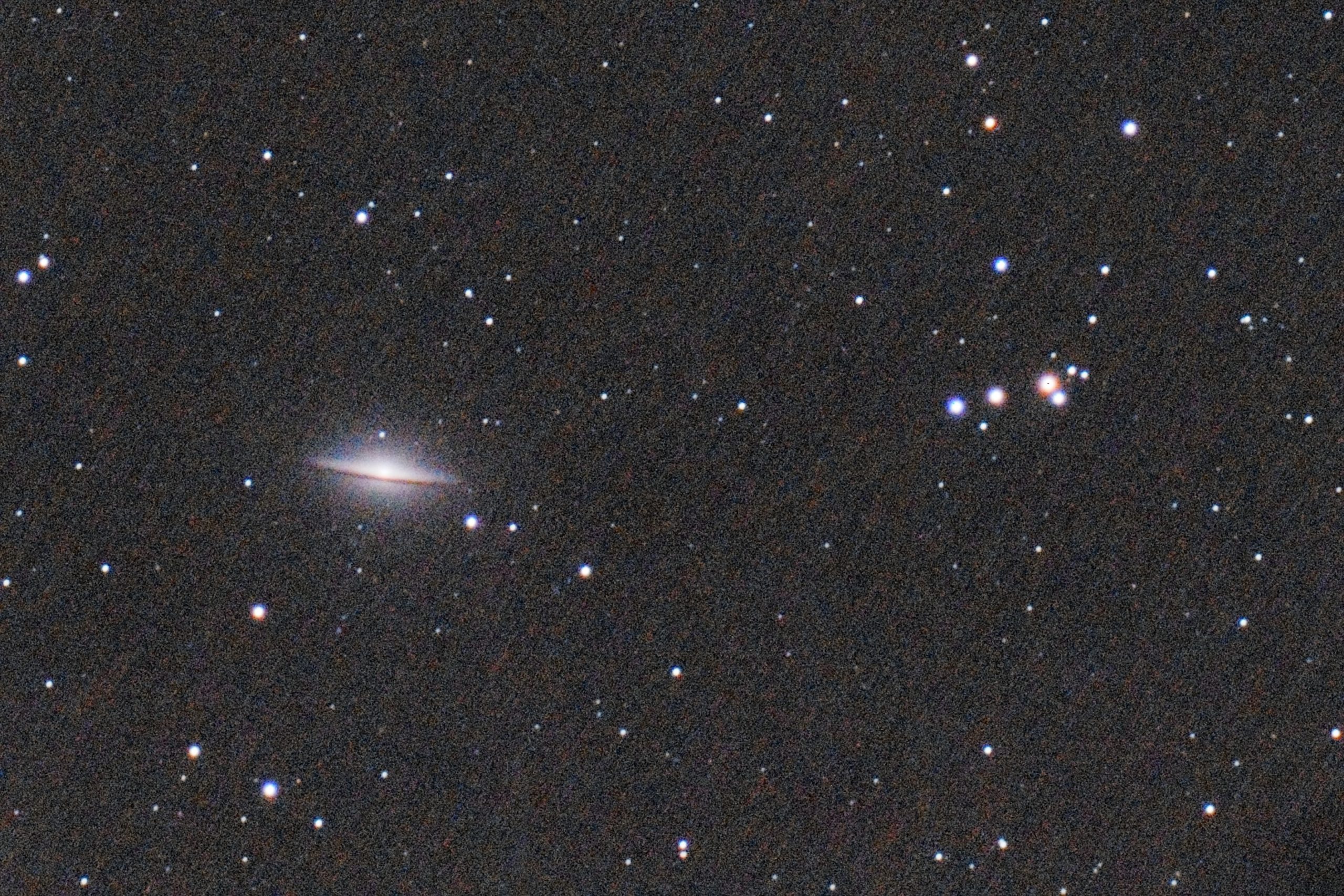
My personal favorite on the list. Sombrero galaxy, located in the constellation Virgo, is a bright and colorful lenticular galaxy, making it a fantastic astrophotography target for your telescope in Spring (a telephoto lens may have a too short focal length to reveal many details). If you are reading this article in March, April, or May, make this target a top priority to photograph. And don't forget to also frame The Jaws, those three colorful stars at the right from the M104!
| Object | Sombrero Galaxy |
| Object type | Lenticular galaxy |
| Other names | M104, Messier 104 |
| Constellation | Virgo |
| RA (right ascension) | 12h 39m 59s |
| DEC (declination) | −11° 37′ 23″ |
| Magnitude | 8.0 |
| Size | 9 × 4 arcmins |
5. Bode and Cigar Galaxies (M81 & M82)
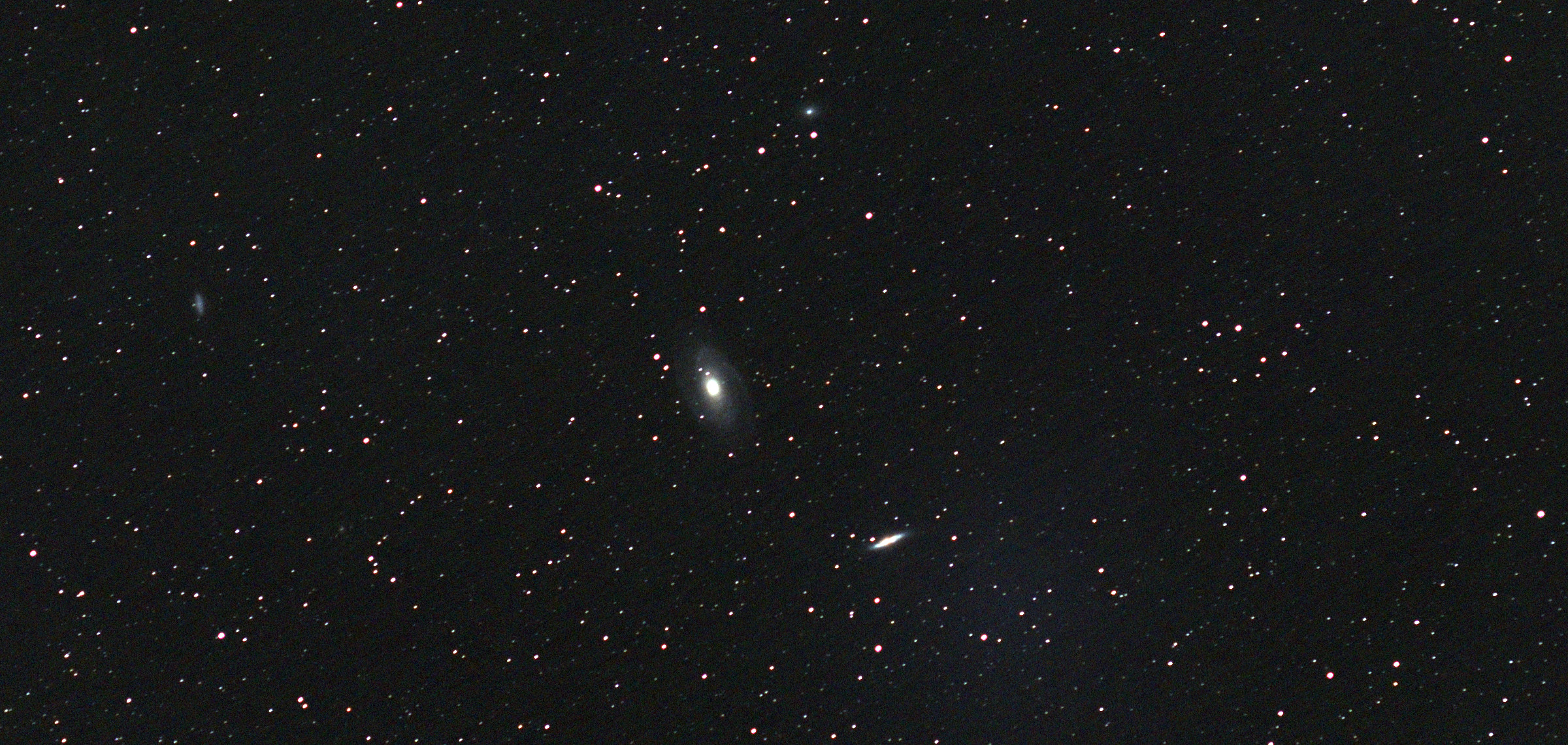
Bode’s and Cigar galaxies are one of the first galaxies every beginner astrophotographer starts with. These astrophotography targets are often imaged together due to their closeness to each other, although you can photograph them separately if you have a huge telescope or a very small sensor in your camera. It’s easy to locate them in the night sky even for a beginner, thanks to the M81 and M82 position on the sky just next to the Ursa Major constellation.
| Object | Bode's Galaxy | Cigar Galaxy |
| Object type | Spiral galaxy | Starburst galaxy |
| Other names | M81, NGC 3031 | M82, NGC 3034 |
| Constellation | Ursa Major | Ursa Major |
| RA (right ascension) | 09h 55m 33.2s | 09h 55m 52.2s |
| DEC (declination) | +69° 3′ 55″ | +69° 40′ 47″ |
| Magnitude | 6.9 | 8.4 |
| Size | 26 × 14 arcmins | 11 × 5 arcmins |
6. M3/NGC 5272 Star Cluster - the Spring cluster king
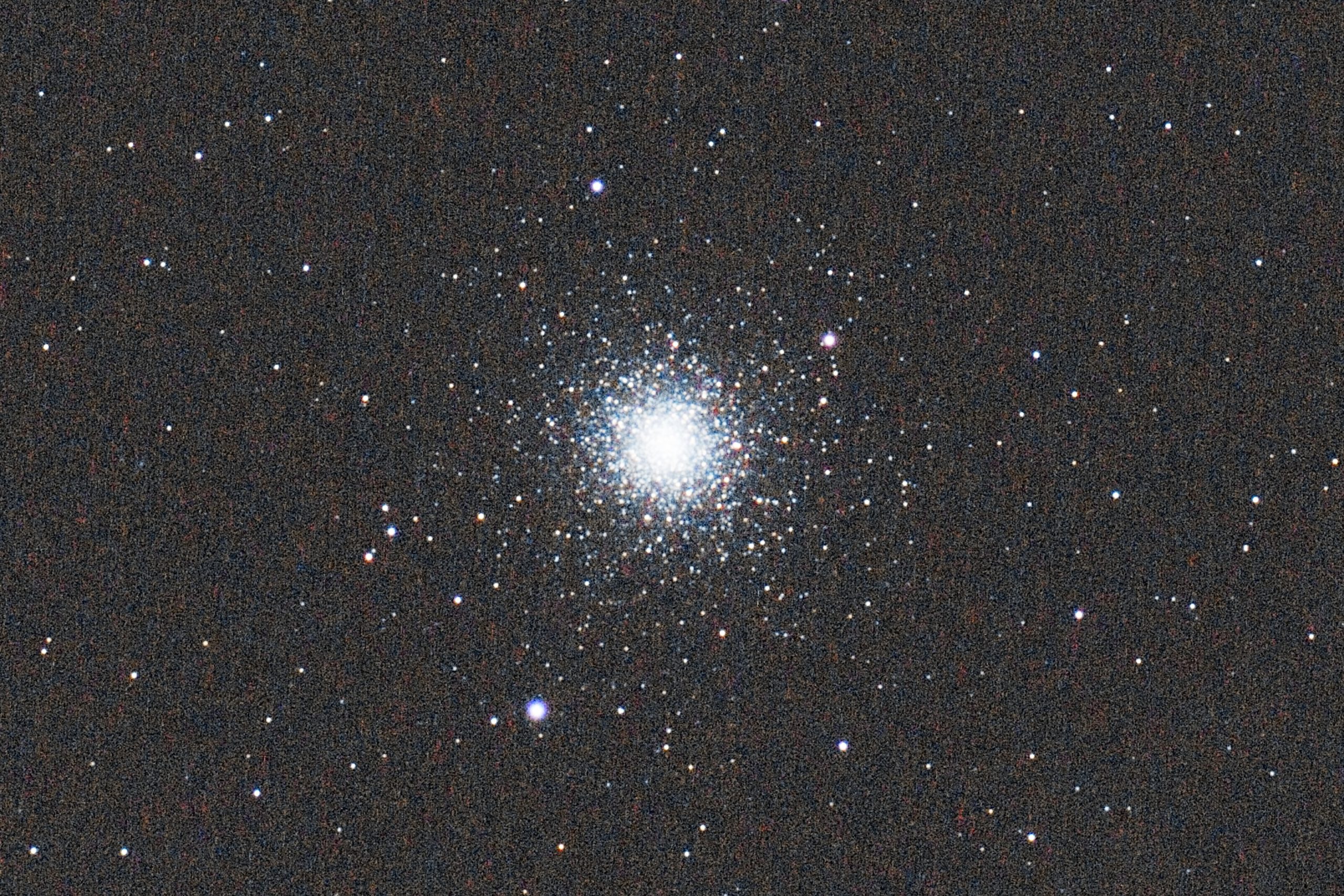
The first non-galaxy celestial object on the list, the M3 globular star cluster. You can find it the Canes Venatici constellation, very close to Sirius, the brightest star in the night sky. At first star clusters may not appear as attractive for astrophotographers as nebulae and galaxies, but spend an hour or two exposing this target, and you will see a plethora of colors inside (I like especially blues)!
| Object | M3 Star Cluster |
| Object type | Globular cluster |
| Other names | M3, Messier 3, NGC 5272 |
| Constellation | Canes Venatici |
| RA (right ascension) | 13h 42m 11s |
| DEC (declination) | +28° 22′ 38.2″ |
| Magnitude | 5.9 |
| Size | 18 × 18 arcmins |
7. Whirlpool Galaxy (M51)
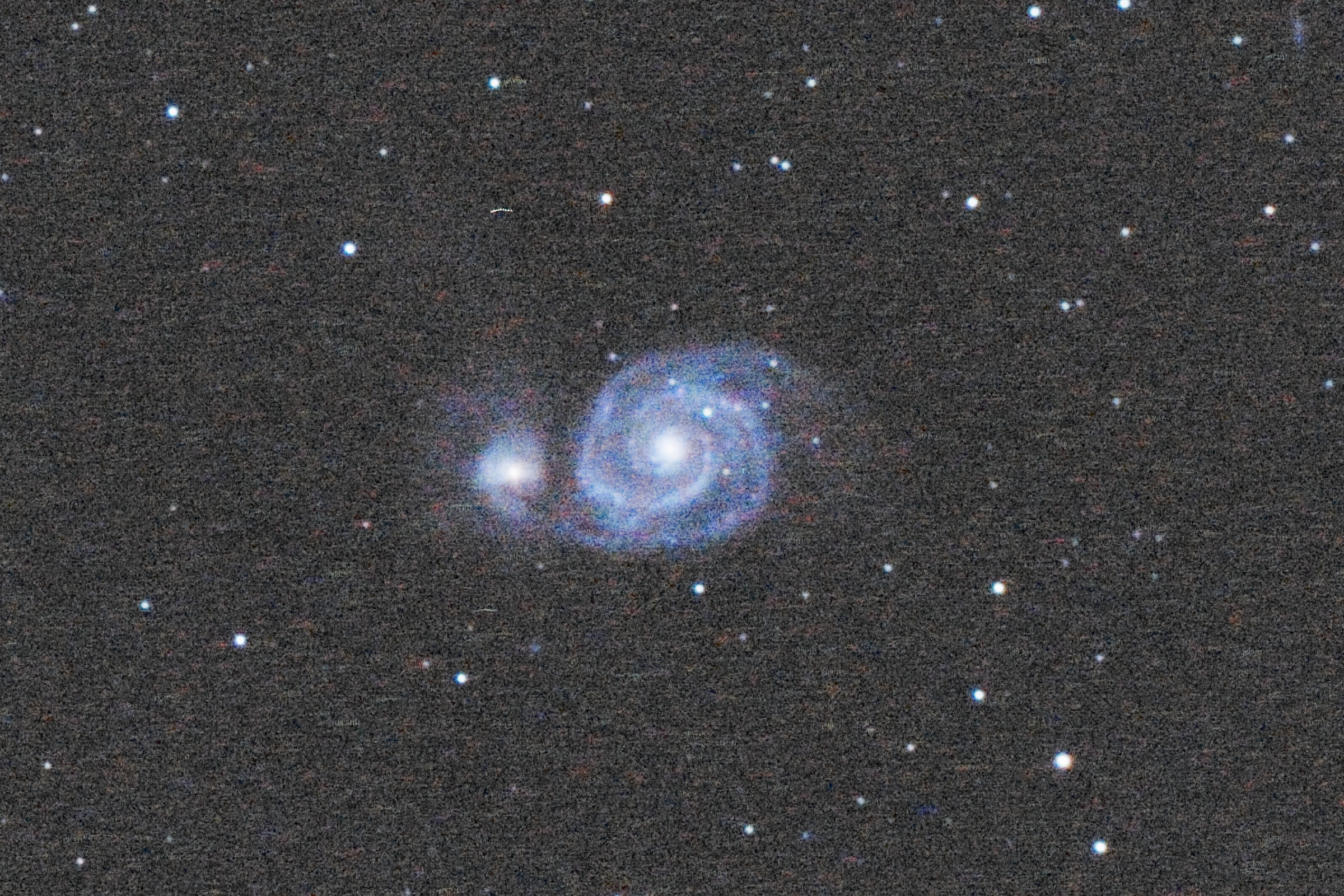
One of the most famous galaxies besides Andromeda and Pinwheel galaxies. The Whirlpool galaxy is located in the Canes Venatici constellation, just next to the Alkaid in the Big Dipper. Light pollution is easy to beat due to the high altitude of this target. Take a lot of frames; it's not a bright target but worth every minute of exposure.
| Object | Whirlpool Galaxy |
| Object type | Spiral galaxy |
| Other names | M51, Messier 51, NGC 5194 |
| Constellation | Canes Venatici |
| RA (right ascension) | 13h 29m 53s |
| DEC (declination) | +47° 11′ 43″ |
| Magnitude | 8.4 |
| Size | 11 × 8 arcmins |
Comments
No Comments