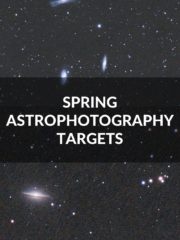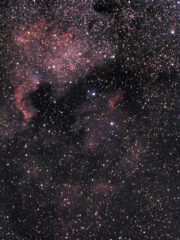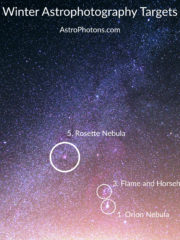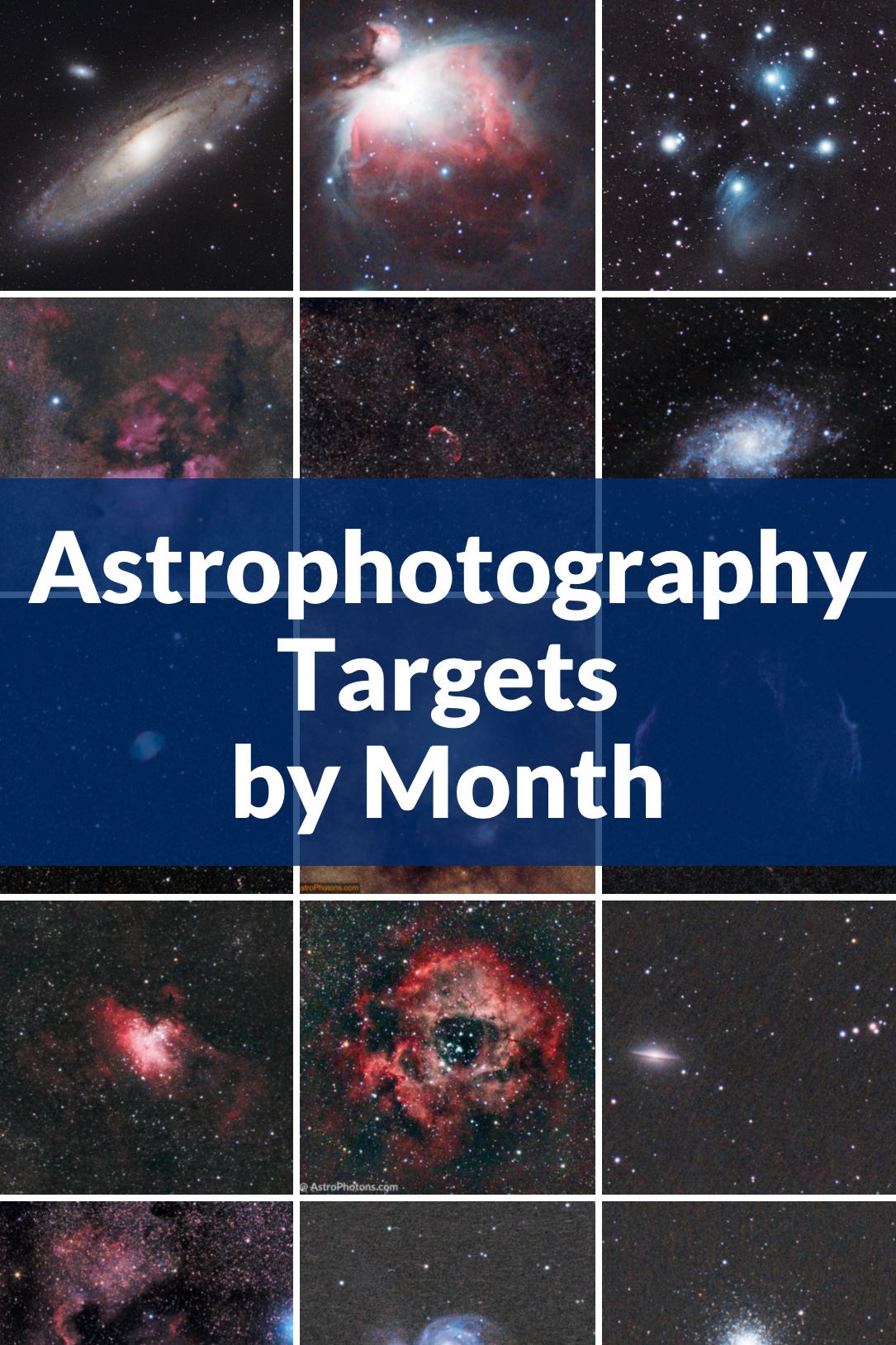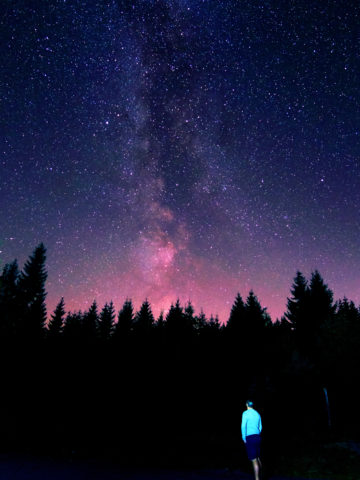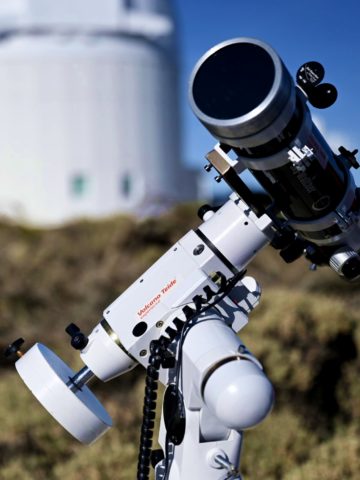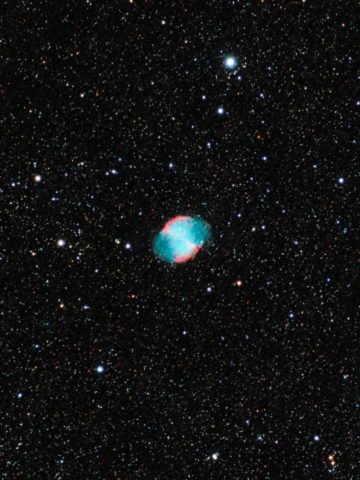

New to astrophotography? Not sure where to point your shiny new telephoto lens or telescope? Then this page is for you! This article features the best astrophotography targets by month for beginners in the Northern Hemisphere. It's perfect for newcomers who don't yet know what to shoot or where to aim their telescope.
Pro tip: Bookmark this page - you'll want to return to it all year long!
The list is big, so you'll have plenty of astro-targets to keep you busy. Objects are listed alphabetically within each month, not by difficulty. My personal favorites are bolded - check those out if you want to go straight for the best-looking ones.
And if you don't know how to find a target in the sky?
Use the free Stellarium app or software - or a GOTO equatorial mount, where you can just enter the name or coordinates. You can also use a Mount Tracking Calculator to check how long you can track objects without star trails depending on your setup.
Let's get started!

Jump to:
- 106 Astrophotography Targets by Month List & Calendar
- January - Cold Nights, Bright Nebulae
- February - Fainter Gems in Winter's Grip
- March - Winter Fades, Spring Galaxies Ahead
- April - Galaxy Season Begins
- May - Peak Galaxy Season
- June - Galaxies Fade, Globulars Rise
- July - Nebula Season Begins
- August - Nebulae Everywhere
- September - Milky Way Fade, Autumn Objects Rise
- October - Faint Nebulae and Galaxy Groups
- November - Iconic Galaxies and Northern Classics
- December - Final Nebulae and Winter Showstoppers
- What's Your Favorite Target This Month?
- My Progress on the Targets
- FAQ
- 💬 Comments
106 Astrophotography Targets by Month List & Calendar
This is my personal collection of deep-sky objects - galaxies, nebulae, and star clusters - that I've photographed or planned to capture throughout my astrophotography journey.
The night sky is huge, but a telescope's field of view is tiny -
to better frame your target, use the Field of View Calculator with your scope and camera settings.
As a beginner, I had no idea where the best objects were - I learned it the hard way. That's why I created this guide:
To help you find the most beautiful and photogenic targets faster and with less frustration.
Most targets here are doable with a telephoto lens (100mm or more) or a small refractor telescope (I use the Sky-Watcher Evostar 72ED most of the time). Some objects are large and bright. Others are smaller or more advanced.
But all of them have one thing in common:
They're worth photographing.
January - Cold Nights, Bright Nebulae
January skies are crisp and packed with some of the most iconic deep-sky objects of the year. Orion dominates the sky, bringing with it a whole neighborhood of nebulae and clusters. This month is perfect for shooting wide-field scenes filled with bright hydrogen gas. To estimate how long to expose your shots before stars start trailing, try the Exposure Time Calculator. Just bundle up - it's cold, but worth it.
California Nebula (NGC 1499 / Sh2-220)
A large emission nebula in Perseus that resembles the outline of California. Great for wide-field imaging, especially with narrowband filters.
Crab Nebula (M1 / NGC 1952)
A bright supernova remnant in Taurus - the leftover of a star that exploded in 1054 AD. Compact but packed with structure.
Flame Nebula (NGC 2024 / Sh2-277)
A glowing red emission nebula near Orion's Belt. Often captured in the same frame as the Horsehead Nebula. Rich in hydrogen gas.
Flaming Star Nebula (IC 405 / Sh2-229 / Caldwell 31)
An emission-reflection nebula surrounding the star AE Aurigae. Its mix of blue and red hues makes it a colorful target for narrowband or broadband imaging.
Horsehead Nebula (Barnard 33)
A famous dark nebula silhouetted against the red glow of IC 434. A true bucket-list target, best captured with longer exposures and H-alpha filters. The Air Mass Calculator can help you plan sessions when the target is high enough in the sky for best results.
IC 342 Spiral Galaxy (Caldwell 5)
A dusty spiral galaxy partially obscured by the Milky Way. Large and low-contrast, but rewarding for persistent imagers.
NGC 1907 Open Cluster
A tight group of stars located near M38 in Auriga. Small but photogenic, especially in wide-field compositions with surrounding clusters.
Orion Nebula (M42 / NGC 1976)
The ultimate beginner's target. Bright, large, colorful - and visible even in light-polluted skies. A stellar nursery only 1,300 light-years away.
Pleiades Star Cluster (M45)
Extremely bright and visible to the naked eye. This cluster is surrounded by faint blue reflection nebulae - perfect for DSLR or mirrorless cameras. You can check your telescope's resolution limits with the Telescope Resolution Calculator to see how much detail you can expect.
Running Man Nebula (NGC 1977 / Sh2-279)
A reflection nebula located just north of the Orion Nebula. Named after the human-like shape seen in long-exposure images.
Starfish Cluster (M38 / NGC 1912)
An open cluster in Auriga that vaguely resembles a starfish. Great for binoculars and short exposures - pairs well with M36 and M37.
Tadpole Nebula (NGC 1893 / IC 410)
Located in the constellation Auriga, this emission nebula contains newborn stars and dusty pillars shaped like tadpoles. Beautiful in narrowband.
Witch Head Nebula (IC 2118)
A faint reflection nebula near Rigel in Orion. With enough exposure time, its eerie shape looks like a witch's profile - haunting and unique.
February - Fainter Gems in Winter's Grip
February continues the deep-winter observing season in the Northern Hemisphere. You'll find a mix of colorful emission and reflection nebulae, plus some of the richest open clusters around. Nights are still long and dark - ideal for long exposures and narrowband imaging. Expect a slightly quieter sky, but full of photogenic surprises.
Angel Nebula (NGC 2170)
A soft, bluish reflection nebula surrounded by dusty lanes in Monoceros. A delicate and lesser-known target with great contrast in wide-field shots.
Cone Nebula and Christmas Tree Cluster (NGC 2264)
A festive combo in Monoceros - the Christmas Tree Cluster forms a triangle of stars, with the red Cone Nebula as its tip.
Jellyfish Nebula (IC 443 / Sharpless 248)
A bright supernova remnant in Gemini with a tangled, tentacle-like structure. Best captured in narrowband, especially H-alpha and OIII.
M35 Open Cluster (NGC 2168)
A large, loose open cluster in Gemini. Bright, beginner-friendly, and beautiful through binoculars or a short focal length telescope.
M37 Open Cluster (NGC 2099)
One of the richest open clusters in the sky, located in Auriga. Dense and sparkly - a great winter target for smaller telescopes.
M78 Reflection Nebula (NGC 2068)
A blue reflection nebula near Orion's Belt. Its ghost-like appearance makes it perfect for longer exposures and dark skies.
NGC 2158
A dense, ancient star cluster right next to M35. Though smaller and dimmer, it adds depth when captured in the same frame.
Rosette Nebula (Caldwell 49)
A vast emission nebula in Monoceros shaped like a blooming flower. Use a narrowband filter for incredible structure and contrast.
Thor's Helmet (NGC 2359)
A bubble-like emission nebula in Canis Major. Its dynamic, helmet-shaped structure glows beautifully in narrowband palettes.
March - Winter Fades, Spring Galaxies Ahead
March marks the seasonal transition - with the last of the winter nebulae and the first signs of galaxy season creeping in. This is a great time to capture planetary nebulae and open clusters before they sink below the horizon. The weather may be mixed, but the target list is anything but boring.
Eskimo / Clown-Faced / Lion Nebula (NGC 2392 / Caldwell 39)
A planetary nebula in Gemini resembling a face surrounded by a furry hood. Small but full of detail in higher magnifications.
M46 Open Cluster (NGC 2437)
A rich star cluster in Puppis. What makes it special is the planetary nebula NGC 2438, overlapping it in the same field of view.
M47 Open Cluster (NGC 2422)
Located near M46, this is a looser and brighter open cluster - makes for a fun wide-field pairing in early spring.
M67 Open Cluster (NGC 2682)
One of the oldest known open clusters in the sky, found in Cancer. A compact group of aging stars - great for long exposures.
Medusa Nebula (Abell 21 / Sharpless 2-274)
A large, faint planetary nebula in Gemini. Its ghostly loops resemble flowing hair - best captured with narrowband filters.
NGC 2403 Spiral Galaxy (Caldwell 7)
An intermediate spiral galaxy in Camelopardalis. Surprisingly bright and detailed - a great target for imaging from mid-latitudes.
NGC 2903 Barred Spiral Galaxy
A beautiful barred spiral in Leo. Often overlooked but bright enough for moderate-sized telescopes and DSLRs.
April - Galaxy Season Begins
April kicks off full galaxy mode. Leo, Ursa Major, and Virgo climb high in the sky, bringing with them dozens of bright and photogenic galaxies. From elegant spirals to chaotic mergers, this month is heaven for astrophotographers with longer focal lengths - but wide-field shooters won't be left out either.
Bode's Galaxy (M81)
A bright spiral galaxy in Ursa Major. One of the easiest galaxies to photograph - sharp arms and a glowing core make it a favorite for beginners.
Cigar Galaxy (M82)
Located next to M81, this edge-on starburst galaxy looks like it's exploding with energy. Often photographed together with Bode's Galaxy in a single frame.
Leo Triplet (M65, M66, NGC 3628)
A trio of galaxies in Leo, also known as the M66 Group. Perfect for medium focal lengths - three galaxies in one shot!
Hickson 44 Galaxy Group (NGC 3185, 3187, 3190, 3193)
A tight group of galaxies in Leo. Challenging but rewarding - shows interesting galactic interaction.
Little Pinwheel Galaxy (NGC 3184)
A face-on spiral galaxy with a subtle but elegant shape. Requires longer exposures to reveal structure and color.
M108 Barred Spiral Galaxy (NGC 3556)
An edge-on barred spiral near the Owl Nebula. Long and flat, with dust lanes clearly visible in deep images.
M95 Barred Spiral Galaxy (NGC 3351)
A beautiful barred spiral in Leo. Bright core with subtle arms - benefits from dark skies and longer integration time.
M96 Intermediate Spiral Galaxy (NGC 3368)
Slightly distorted due to past interactions. Often photographed along with M95 - a great double-target session.
NGC 3718 Galaxy (Arp 214)
A warped spiral galaxy with an S-shaped structure. Photogenic and strange - worth the effort with longer focal lengths.
NGC 3729 Barred Spiral Galaxy
A companion galaxy to NGC 3718, often captured in the same frame. Smaller and fainter, but adds composition depth.
Owl Nebula (M97 / NGC 3587)
A planetary nebula with two dark "eyes" that give it its name. Located near M108 - great for a galaxy + nebula combo night.
May - Peak Galaxy Season
May is the heart of galaxy season. The Virgo Cluster dominates the sky, offering a dense field of targets perfect for deep integrations or wide-field mosaics. If you've been wanting to explore Markarian's Chain, Sombrero, or the Needle Galaxy, now's your chance. Nights are getting shorter, so plan your sessions wisely.
Hockey Stick / Crowbar Galaxies (NGC 4656 and 4657)
Two interacting galaxies in Canes Venatici. Their twisted shapes resemble a hockey stick - fun target for advanced beginners.
M100 Galaxy (NGC 4321)
A grand design spiral in Coma Berenices. One of the brightest and best-defined spiral galaxies in the Virgo Cluster.
M106 (NGC 4258)
A bright and active spiral galaxy with visible arms and a dynamic core. Great target for DSLR imaging in late spring.
M109 Barred Spiral Galaxy (NGC 3992)
Located near Phecda in the Big Dipper. Has a prominent bar structure and a soft halo - popular for galaxy season.
M94 Spiral Galaxy (NGC 4736)
A compact galaxy in Canes Venatici. Nicknamed the "Cat's Eye Galaxy," it has a very bright core and ring-like arms.
Markarian's Chain
A famous chain of galaxies in Virgo. Includes M84, M86, and several NGC galaxies. Perfect for wide-field galaxy photography.
NGC 4312 Edge-On Spiral Galaxy
A slim, elegant galaxy near the center of the Virgo Cluster. Great addition to a galaxy field with Markarian's Chain.
NGC 4725 Barred Spiral Galaxy
A one-armed spiral in Coma Berenices. Unusual appearance - fun for more artistic compositions.
Needle Galaxy (NGC 4565 / Caldwell 38)
A classic edge-on galaxy. Extremely thin and detailed, it looks like a galactic blade - a showstopper under dark skies.
Silver Needle Galaxy (NGC 4244 / Caldwell 26)
Another beautiful edge-on galaxy, slightly softer than NGC 4565. Ideal for long exposures and a narrow field of view.
Sombrero Galaxy (M104 / NGC 4594)
One of the most iconic galaxies in the sky. Its bright bulge and thick dust lane make it look like a floating hat.
Whale Galaxy (NGC 4631 / Caldwell 32)
Looks like a whale swimming through space - a disturbed spiral galaxy with a dynamic, uneven shape. A great match with NGC 4627.
June - Galaxies Fade, Globulars Rise
June skies mark the end of galaxy season and the rise of summer's globular clusters and bright spiral galaxies. Nights are shorter, but temperatures are warmer - making this a great month for casual observing and late-night imaging sessions. It's also the perfect time to test your gear on tight star clusters and photogenic edge-on galaxies.
Black Eye Galaxy (M64 / NGC 4826)
A spiral galaxy in Coma Berenices with a dark, circular dust lane near its core - resembling a bruised eye. Small but bright.
M3 Globular Cluster (NGC 5272)
One of the brightest globular clusters in the sky. Dense, round, and filled with ancient stars - beautiful in almost any telescope.
M5 Globular Cluster (NGC 5904)
Another top-tier globular, slightly brighter than M13. Extremely tight core and full of texture when viewed up close.
Pinwheel Galaxy (M101 / NGC 5457)
A large, face-on spiral galaxy in Ursa Major. Needs dark skies and long exposures to bring out its elegant arms.
Splinter Galaxy (NGC 5907)
Also known as the Knife Edge Galaxy. A razor-thin edge-on spiral with a faint halo - stunning in longer focal lengths.
Sunflower Galaxy (M63 / NGC 5055)
A spiral galaxy in Canes Venatici with a bright yellow core and softly defined arms. Great contrast target.
Whirlpool Galaxy (M51a / NGC 5194)
A textbook spiral interacting with a smaller companion. Easy to frame and rich in structure - one of the best spring-to-summer transition targets.
July - Nebula Season Begins
With the summer Milky Way climbing high, July brings bright emission nebulae and globular clusters into prime position. This is when wide-field setups truly shine. The Lagoon, Trifid, and Cat's Eye are all within reach - and many of these targets look fantastic even in light-polluted skies with the help of filters.
Cat's Eye Nebula (NGC 6543 / Caldwell 6)
A planetary nebula in Draco with a bright core and concentric shells. Best seen at high magnification or with narrowband imaging.
Hercules Globular Cluster (M13 / NGC 6205)
The best-known globular cluster in the Northern Hemisphere. A dense ball of stars - impressive in both small and large scopes.
Lagoon Nebula (M8 / NGC 6523 / Sharpless 25)
A massive star-forming region in Sagittarius. Glows red in H-alpha and features a dark dust lane across its center.
M12 Globular Cluster (NGC 6218)
A looser, more diffuse globular cluster in Ophiuchus. Easy to capture and contrast nicely with the richer M10 nearby.
Trifid Nebula (M20 / NGC 6514)
A unique combination of emission, reflection, and dark nebula. Famous for its three-part dust lanes - a classic wide-field summer target.
August - Nebulae Everywhere
August is one of the best months for wide-field astrophotography. The Milky Way core is still high after midnight, and emission nebulae in Sagittarius and Cygnus dominate the sky. Warm nights and a classic summer meteor shower (the Perseids!) make this a favorite season for many stargazers and imagers.
Barnard's Galaxy (NGC 6822 / IC 4895 / Caldwell 57)
A faint dwarf galaxy in Sagittarius - part of the Local Group. Best for long exposures and dark skies.
Dumbbell Nebula (M27 / NGC 6853)
One of the brightest planetary nebulae. Shaped like an apple core, it's easy to find and photograph even with small telescopes.
Crescent Nebula (NGC 6888 / Caldwell 27 / Sharpless 105)
A glowing bubble formed by stellar winds from a Wolf-Rayet star. Narrowband imaging brings out rich filaments and textures.
Eagle Nebula (M16 / NGC 6611)
Home to the famous Pillars of Creation. A bright emission nebula in Serpens - perfect for both wide-field and narrowband setups.
M22 Globular Cluster (NGC 6656)
A large and bright globular cluster in Sagittarius. Less famous than M13, but more impressive in low-magnification views.
Omega / Swan Nebula (M17 / NGC 6618)
Looks like a swan, a checkmark, or the number "2" depending on orientation. Bright and compact - great for short exposures.
Ring Nebula (M57 / NGC 6720)
A classic ring-shaped planetary nebula in Lyra. Small, but bright - and a great test of resolution and focusing.
Wild Duck Cluster (M11 / NGC 6705)
A dense, V-shaped open cluster in Scutum. Named for its shape, but best appreciated with medium focal length.
September - Milky Way Fade, Autumn Objects Rise
September bridges the summer nebula season with the start of autumn's best deep-sky targets. The Milky Way is still prominent early in the night, but constellations like Cepheus and Cygnus shift west, while Pegasus and Andromeda climb higher. Time to revisit dusty nebulae, clusters, and a few surprising galaxies.
Elephant's Trunk Nebula (IC 1396)
A dark nebula winding through a bright emission region. Best captured in narrowband - especially H-alpha and OIII.
Fetus Nebula (NGC 7008)
A lesser-known planetary nebula in Cygnus. Small and oddly shaped, it resembles a curled-up embryo in long exposures.
Fireworks Galaxy (NGC 6946)
A face-on spiral in Cepheus near the Milky Way. Dim but structured - a great challenge under dark skies.
Iris Nebula (NGC 7023 / Caldwell 4)
A beautiful reflection nebula surrounded by dark dust. Glows blue and is framed by a smoky halo - ideal for broadband imaging.
M15 Globular Cluster (NGC 7078)
A very dense, compact globular cluster in Pegasus. Easy to locate and a great late-summer target.
M2 Globular Cluster (NGC 7089)
Bright, round, and rich in detail - one of the oldest and most massive clusters in our galaxy.
NGC 6939 Open Cluster
A loose group of stars in Cepheus, often framed together with the Fireworks Galaxy for contrast.
North America Nebula (NGC 7000 / Caldwell 20)
An enormous emission nebula in Cygnus shaped like its namesake. A top-tier wide-field target for narrowband or H-alpha imaging.
Pelican Nebula (IC 5070 and IC 5067)
Located next to the North America Nebula, it resembles a pelican's head. Great structure and detail in narrowband filters.
Veil Nebula (Cygnus Loop)
A vast supernova remnant broken into multiple parts (Eastern Veil, Western Veil, Pickering's Triangle). Stunning with OIII filters and even visible in broadband under dark skies.
October - Faint Nebulae and Galaxy Groups
October nights are longer, darker, and more stable - making it a fantastic month for deep-sky astrophotography. The Milky Way retreats, but in its place rise the fainter and weirder objects: planetary nebulae, compact galaxy groups, and dusty emission regions. Narrowband filters shine this month - both literally and figuratively.
Blue Snowball Nebula (NGC 7662 / Caldwell 22)
A compact, round planetary nebula in Andromeda. Its bluish glow is easy to spot in short exposures - small but punchy.
Bubble Nebula (NGC 7635 / Caldwell 11)
A perfectly round bubble carved out by a massive star's solar wind. Fantastic detail in narrowband; often paired with the nearby Lobster Claw.
Cave Nebula (Caldwell 9 / Sharpless 155)
A complex region of glowing gas and dark dust. The "cave" shape is visible with longer exposures and makes for a dramatic narrowband image.
Cocoon Nebula (IC 5146 / Caldwell 19 / Sh2-125 / Barnard 168)
A nebula wrapped in dark filaments. Beautiful combination of emission, reflection, and dark nebula - especially good in broadband.
Deer Lick Galaxy Group (NGC 7331 Group)
A bright spiral galaxy with several small companions in Pegasus. The field offers a layered, 3D effect when processed well.
Helix Nebula (NGC 7293 / Caldwell 63)
One of the closest planetary nebulae to Earth. Looks like a cosmic eye - large, faint, and stunning in OIII.
Stephan's Quintet (NGC 7317, 7318a, 7318b, 7319, 7320c)
A famous group of five interacting galaxies in Pegasus. Requires longer focal lengths and integration time, but worth the effort.
Wizard Nebula (NGC 7380)
An emission nebula in Cepheus that resembles a cloaked figure. Rich in structure, best captured in SHO narrowband palette.
November - Iconic Galaxies and Northern Classics
November is all about autumn galaxies, early winter nebulae, and a few iconic Messier objects rising late in the night. You'll find more structure, more challenge, and - if you're patient - more reward. Andromeda, Triangulum, and the Pacman Nebula all shine this time of year.
Andromeda Galaxy (M31 / NGC 224)
The crown jewel of autumn. Six times wider than the Moon in the sky - easily photographed with a telephoto lens and perfect for beginners.
Owl Cluster (NGC 457)
An open cluster in Cassiopeia shaped like an owl (or an alien). Two bright "eyes" make it stand out - charming and easy.
Pacman Nebula (NGC 281)
A bright emission nebula in Cassiopeia. Named for its resemblance to the video game character - great in both RGB and narrowband.
Phantom Galaxy (M74 / NGC 628)
A face-on spiral with perfectly symmetric arms. Faint and challenging, but very rewarding under dark skies.
Sculptor Galaxy / Silver Coin (NGC 253)
A large, bright galaxy in Sculptor - low in the Northern Hemisphere, but reachable from lower latitudes. High surface brightness makes it a solid target.
Skull Nebula (NGC 246 / Caldwell 56)
A planetary nebula in Cetus that looks eerily like a skull. Best viewed in OIII, with its ghostly interior glowing greenish-blue.
Triangulum Galaxy (M33 / NGC 598)
A large, face-on spiral that's often overshadowed by Andromeda - but just as beautiful. Great for wide-field setups and deep integrations.
December - Final Nebulae and Winter Showstoppers
December skies are long and stable - perfect for astrophotography. The winter constellations rise high, bringing back favorites like Orion, Auriga, and Perseus. While the Milky Way is now low, there's still plenty to shoot: dramatic emission nebulae, reflective dust clouds, and a few galaxies to end the year.
Amatha Galaxy (NGC 925)
A barred spiral galaxy in Triangulum. Irregular in shape but full of detail - a nice off-the-beaten-path galaxy for December nights.
Double Cluster (Caldwell 14 / NGC 869 & NGC 884)
Two open clusters in Perseus, side by side. Stunning through binoculars or wide-field imaging - rich, dense, and full of color variation.
Heart Nebula (IC 1805)
A large emission nebula in Cassiopeia, shaped like a heart. Best captured in H-alpha or narrowband palettes to reveal internal detail.
Little Dumbbell Nebula (M76 / NGC 650 / NGC 651)
A small planetary nebula in Perseus. Compact and faint, but with beautiful bipolar structure - great for higher focal lengths.
Nautilus Galaxy (NGC 772)
A spiral galaxy in Aries with a strikingly asymmetric arm. Great for longer focal lengths and excellent sky transparency.
Silver Sliver / Outer Limits Galaxy (NGC 891)
An edge-on spiral galaxy with a thick dust lane - often compared to what the Milky Way would look like from afar. Photogenic and sharp under dark skies.
Soul Nebula (Sharpless 2-199 / IC 1848)
Often paired with the Heart Nebula, this emission region is full of wispy tendrils and star-forming regions - best shot in narrowband.
Squid Galaxy (M77 / NGC 1068)
A bright Seyfert galaxy in Cetus with an active core. Has a small but intense nucleus - great for mid-to-long focal lengths.
What's Your Favorite Target This Month?
Whether you're just getting started with a DSLR and a tripod or you're running a full astro-rig under dark skies - there's always something new (or old!) to photograph. The night sky changes with the seasons, and so does the way we see it.
I hope this list gave you fresh ideas, goals, and maybe even a new reason to get outside tonight.
Have you captured any of the objects listed here? Got a favorite target I missed?
Let me know in the comments - I'd love to hear what you're shooting this month!
Don't forget to check the Moon Phase before your session - the Moon can easily wash out fainter nebulae.
My Progress on the Targets
FAQ
Do I need a telescope to photograph these targets?
Not necessarily. Many objects on this list - like the Pleiades, Andromeda Galaxy, or Orion Nebula - are perfect for DSLR or mirrorless cameras with a telephoto lens (100mm+). A telescope helps with smaller or fainter targets, but it's not required to get started.
How do I know when a target is visible in my sky?
Use apps like Stellarium, SkySafari, or Telescopius to check when each object is high enough in your local sky. Most of the objects listed are seasonal and appear in evening skies during specific months.
What are the best filters to use for nebulae?
For emission nebulae, narrowband filters like H-alpha (Ha), OIII, and SII are ideal. In light-polluted areas, dual-band or multi-band filters work great with color cameras and reveal structure even under city skies.
Can I shoot galaxies from the city?
It's tough, but possible. Galaxies usually have lower surface brightness and are best shot from dark skies. Still, bright ones like M81, M82, or the Sombrero Galaxy can be captured from suburban locations with proper calibration and longer exposures.
Which targets are best for beginners?
Start with the Orion Nebula (M42), Pleiades (M45), Andromeda Galaxy (M31), and Lagoon Nebula (M8). These are bright, easy to frame, and very forgiving in both tracking and post-processing - perfect for learning the ropes.


Derryl says
Really helpful list of targets. It may help some of us to list the necessary focal length for these. Galaxies can be a disappointment to image with less than 2000mm
Paweł Białecki says
Thanks, Derryl — great point! You’re absolutely right that many galaxies (especially the smaller or more distant ones) really shine at 1000–2000mm or more. I tried to keep the list beginner-friendly, but adding a rough focal length suggestion next to each target would definitely be useful — especially to avoid that “tiny smudge” moment after stacking, haha.
I’ll work on adding that as an update soon — thanks again for the idea and clear skies!