

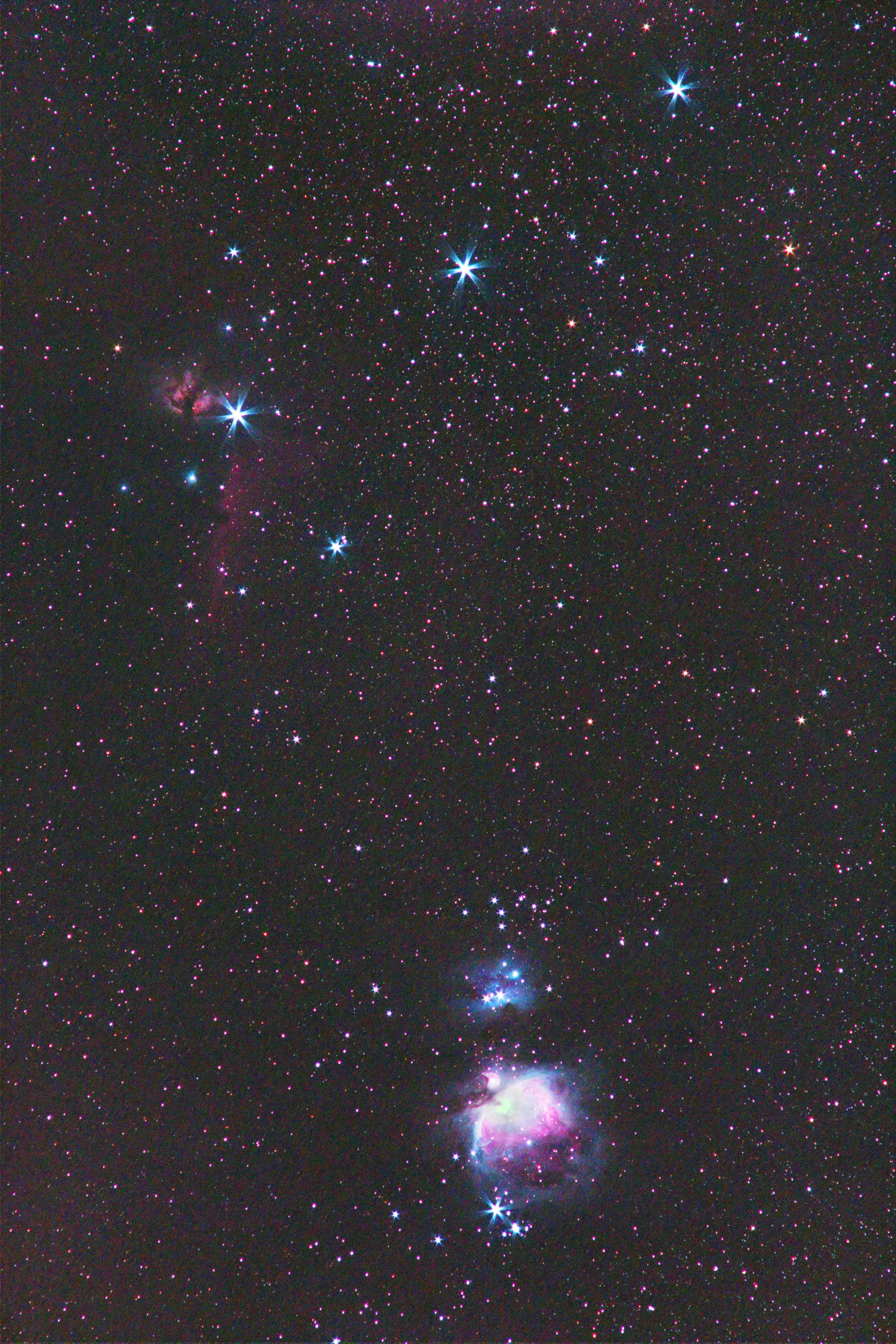
Orion constellation is one of the most popular and recognizable star constellations on the night sky that you can observe with a telescope, binoculars, and even with the naked eye. It's located on the celestial equator, and it's visible throughout the whole Earth (in some areas only in some seasons, e.g. mostly in Winter and early Spring in the Northern Hemisphere). It's the home of a few famous astrophotography targets, like Orion, Flame, Horsehead, Running Man, and Witch Head Nebulae. In this article, you will learn how to find this constellation in the night sky, what are the brightest stars within it, what is the constellation means, and some pure facts and astrophotography tips.
Watch Video: Orion Constellation & Nebula Explained
Jump to:
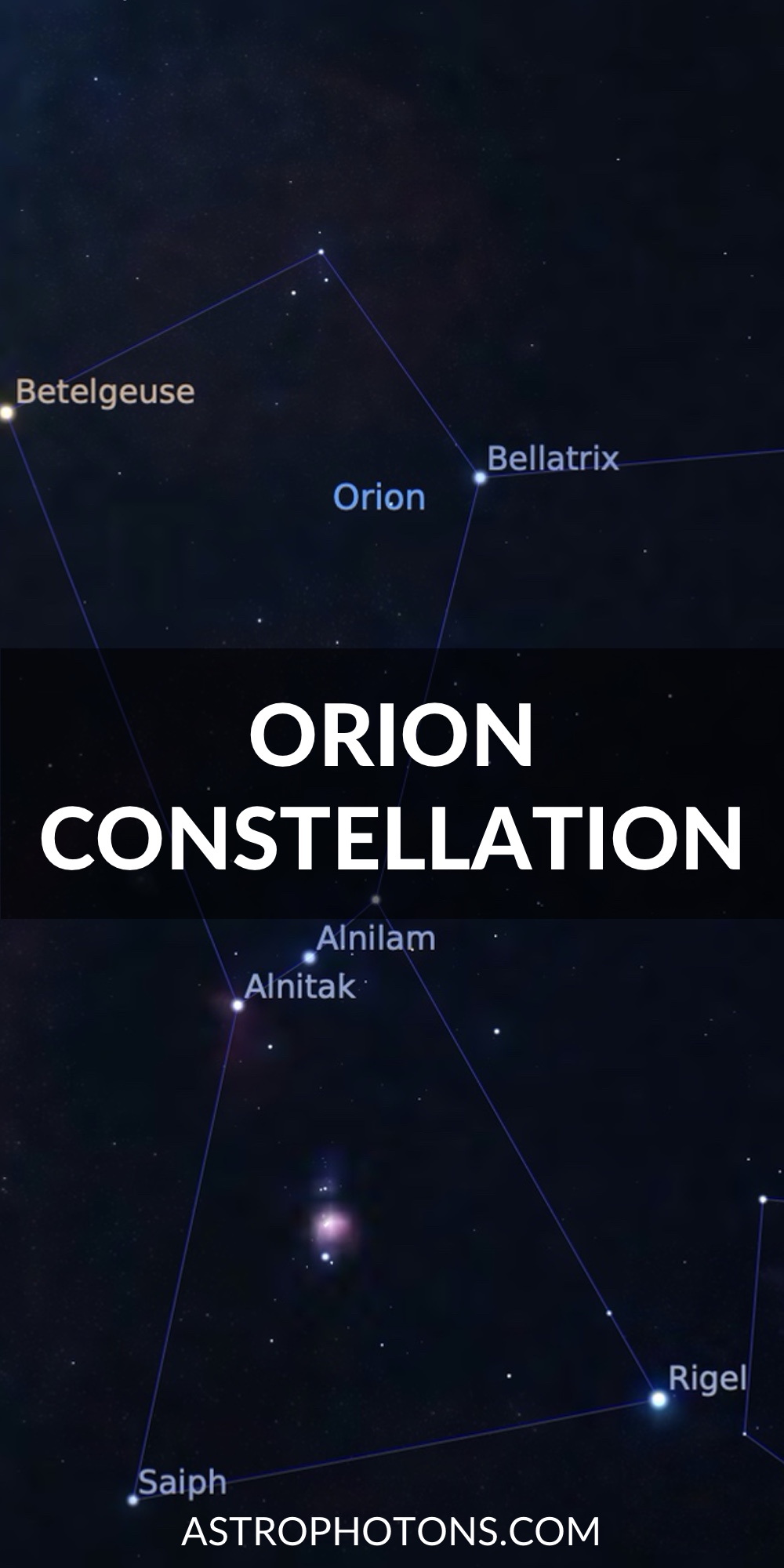
Orion Constellation Facts
| Constellation | Orion |
| Location | Northern sky |
| Quadrant | NQ1 |
| Right ascension (RA) | 5h |
| Declination (DEC) | +5° |
| Best months to see (Northern hemisphere) | November - February |
| Best months to see (Southern Hemisphere) | June - August |
| Messier objects count | 3 |
| Interesting astrophotography deep-sky targets | Orion Nebula, Running Man Nebula, Horsehead Nebula, Flame Nebula, Witch Head Nebula, M78, Lambda Orionis, NGC 1788 |
| Bordering constellations | Eridanus, Gemini, Lepus, Monoceros, Taurus |
| Symbolism | Orion, the Hunter |
| Brightest star | Rigel (β Ori/Beta Orionis) |


How to Find it on the Night Sky
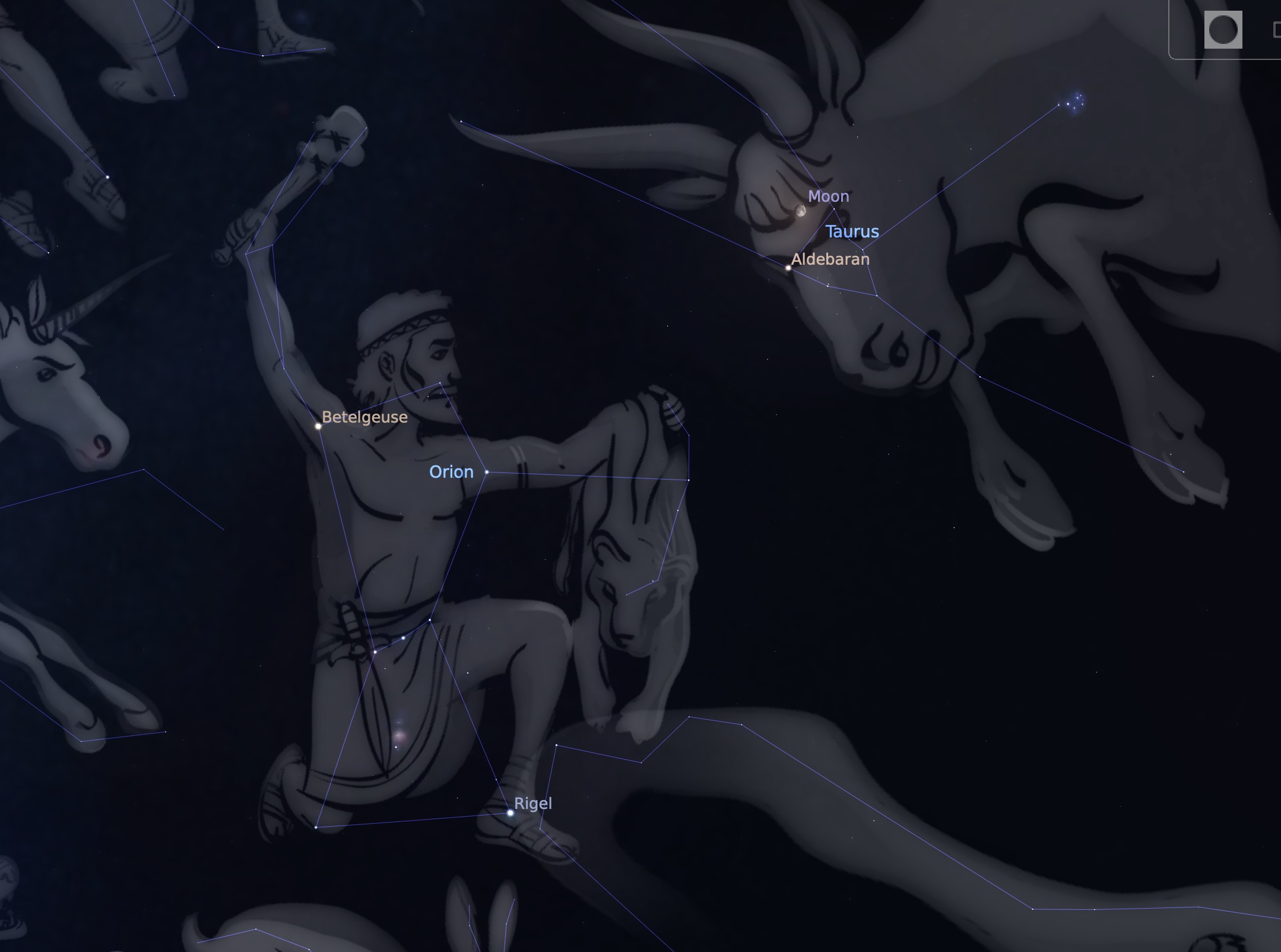
In the Northern Hemisphere, the Orion constellation shines on the night sky most during Winter. Look at the South around midnight in December and in the evening in February (in January somewhere in between). The constellation is located on the equator, so it's pretty low on the sky, just above the horizon.
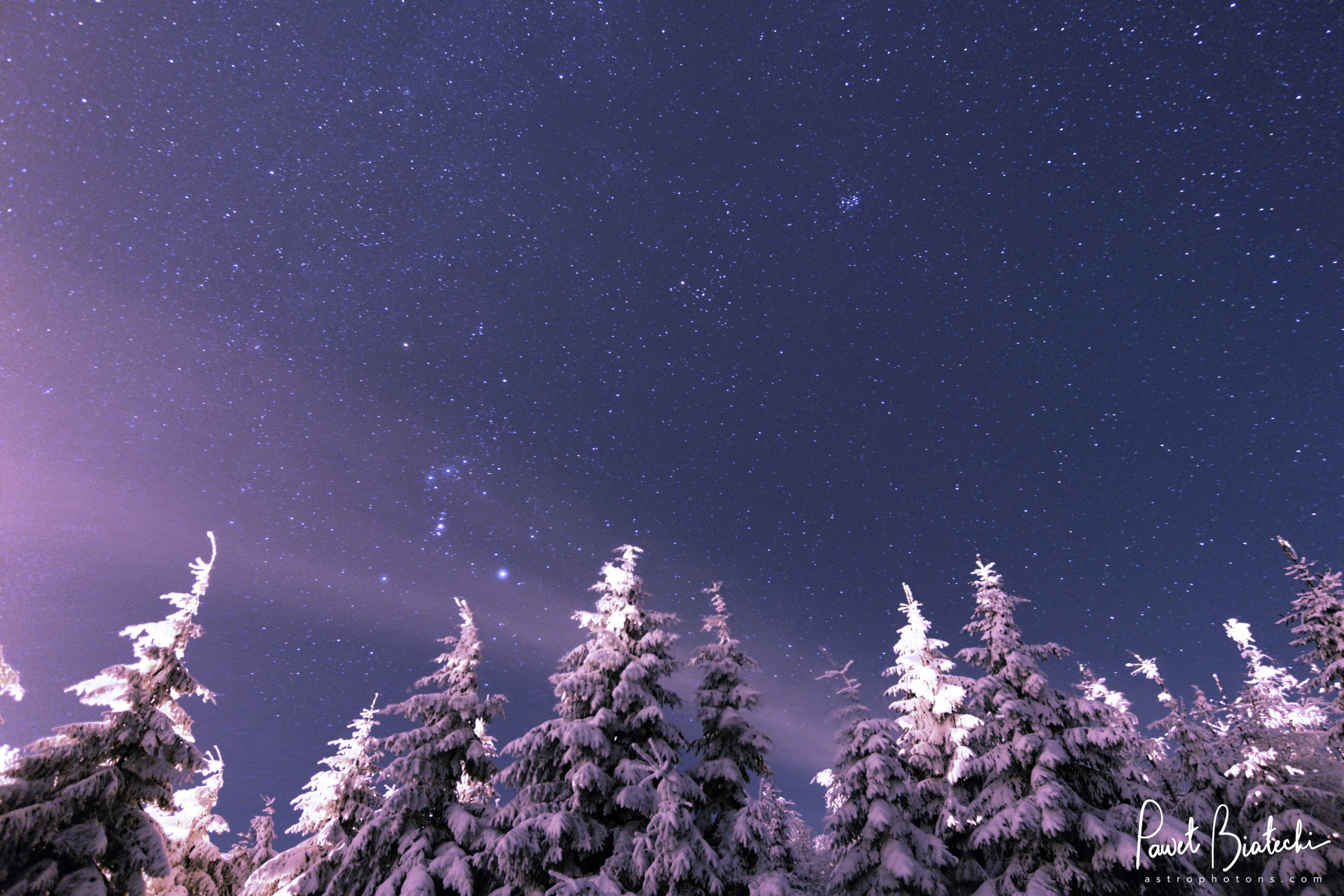
Orion Constellation Map
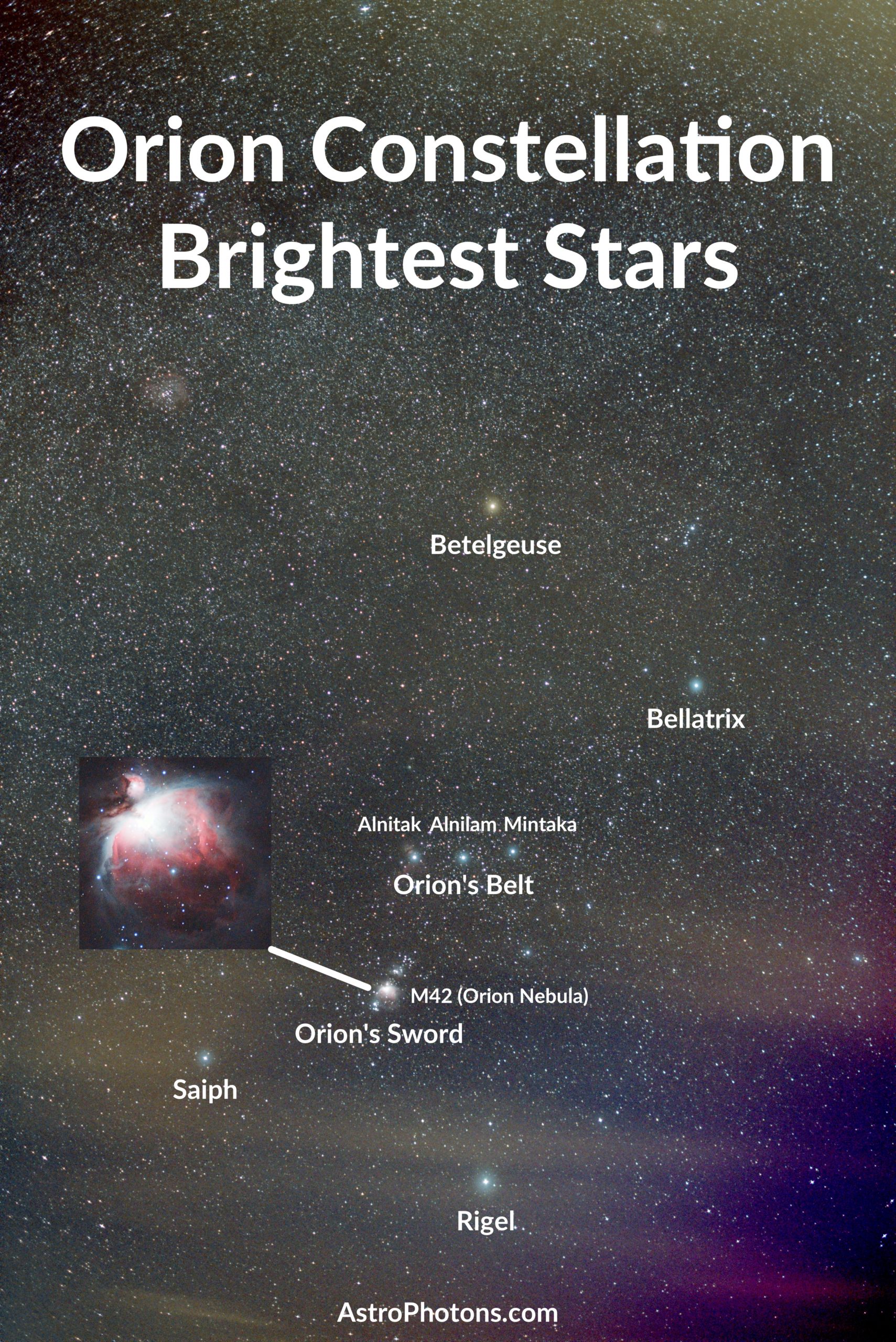
Orion's Belt
When you first look at the Orion constellation, the first-star pattern you will notice will be the Orion's Belt. It consists of three aligned stars - Alnitak (Zeta), Alnilam (Epsilon), and Mintaka (Delta). Locating Orion's Belt is the easiest way to learn how to find the whole constellation in the night sky. If you take a closer look, Orion's Belt forms a diamond-like shape with Betelgeuse and Rigel stars. I always saw it this way when I was a child.
| Alnitak | Alnilam | Mintaka | |
| Type of star | Triple star system | Blue supergiant | Multiple star system |
| Mass | 33 M☉ | 40 M☉ | 24 M☉ |
| Radius | 20 R☉ | 32 R☉ | 17 R☉ |
| Distance from Earth | 1,260 ly | 2,000 ly | 1,200 ly |
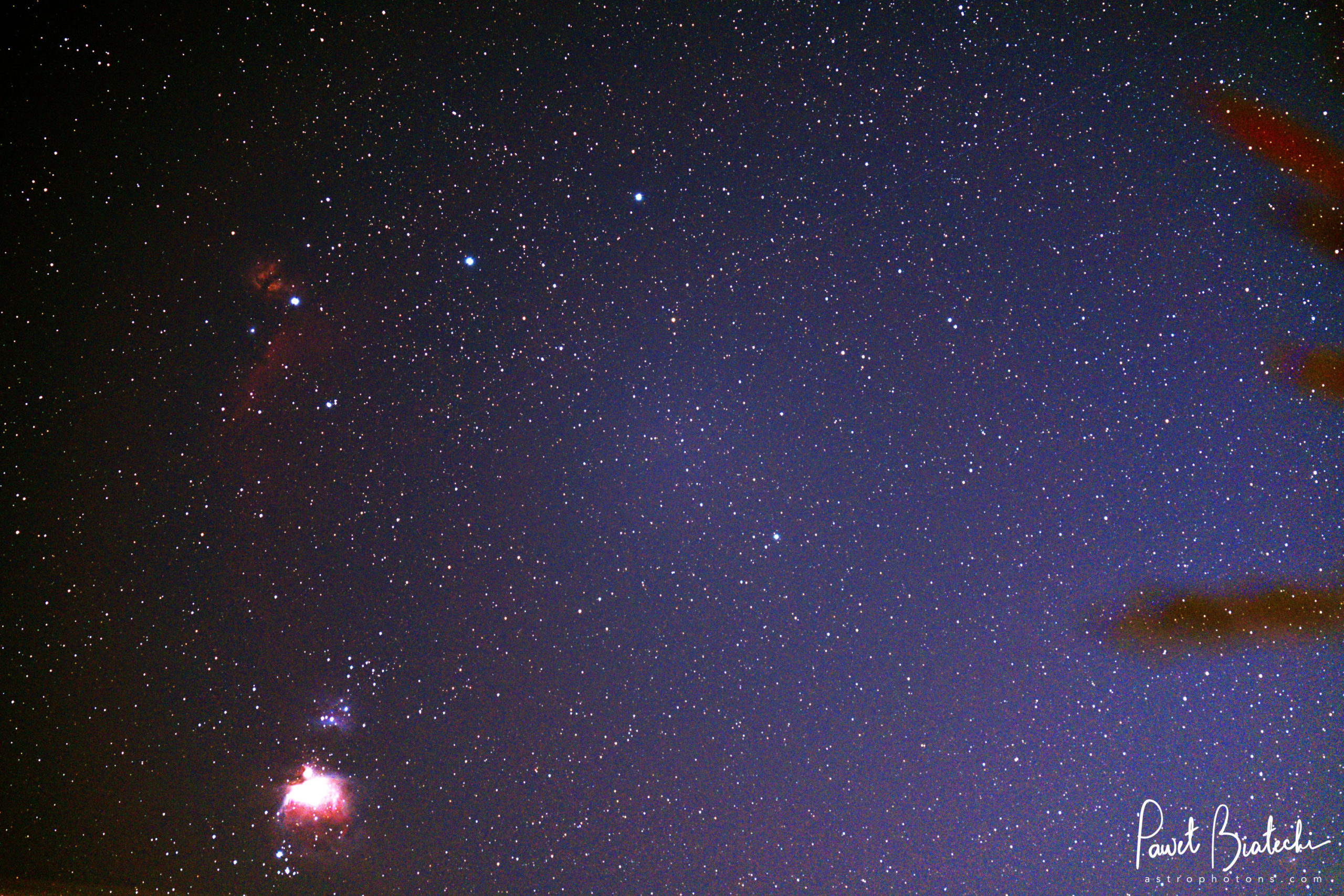
Orion's Sword
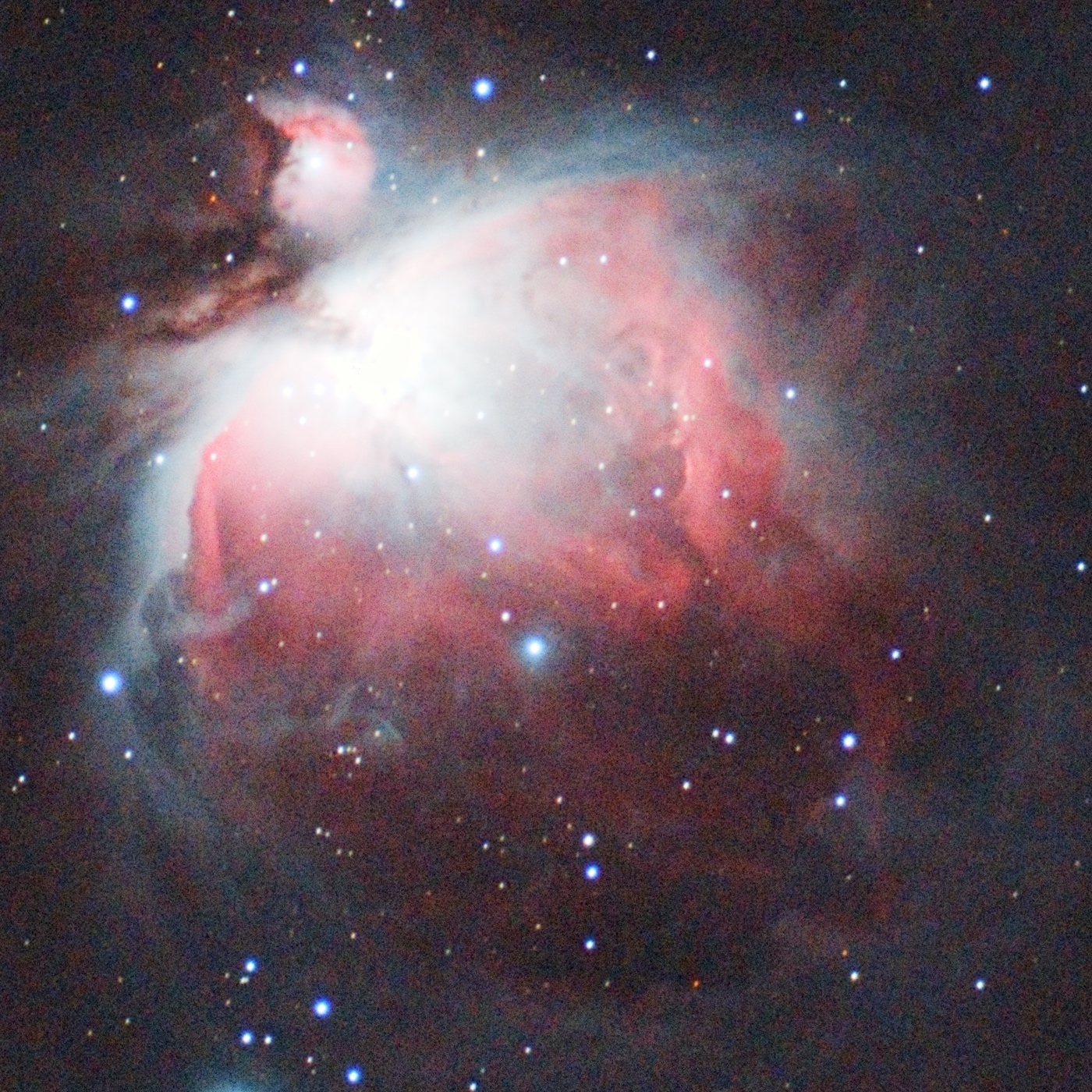
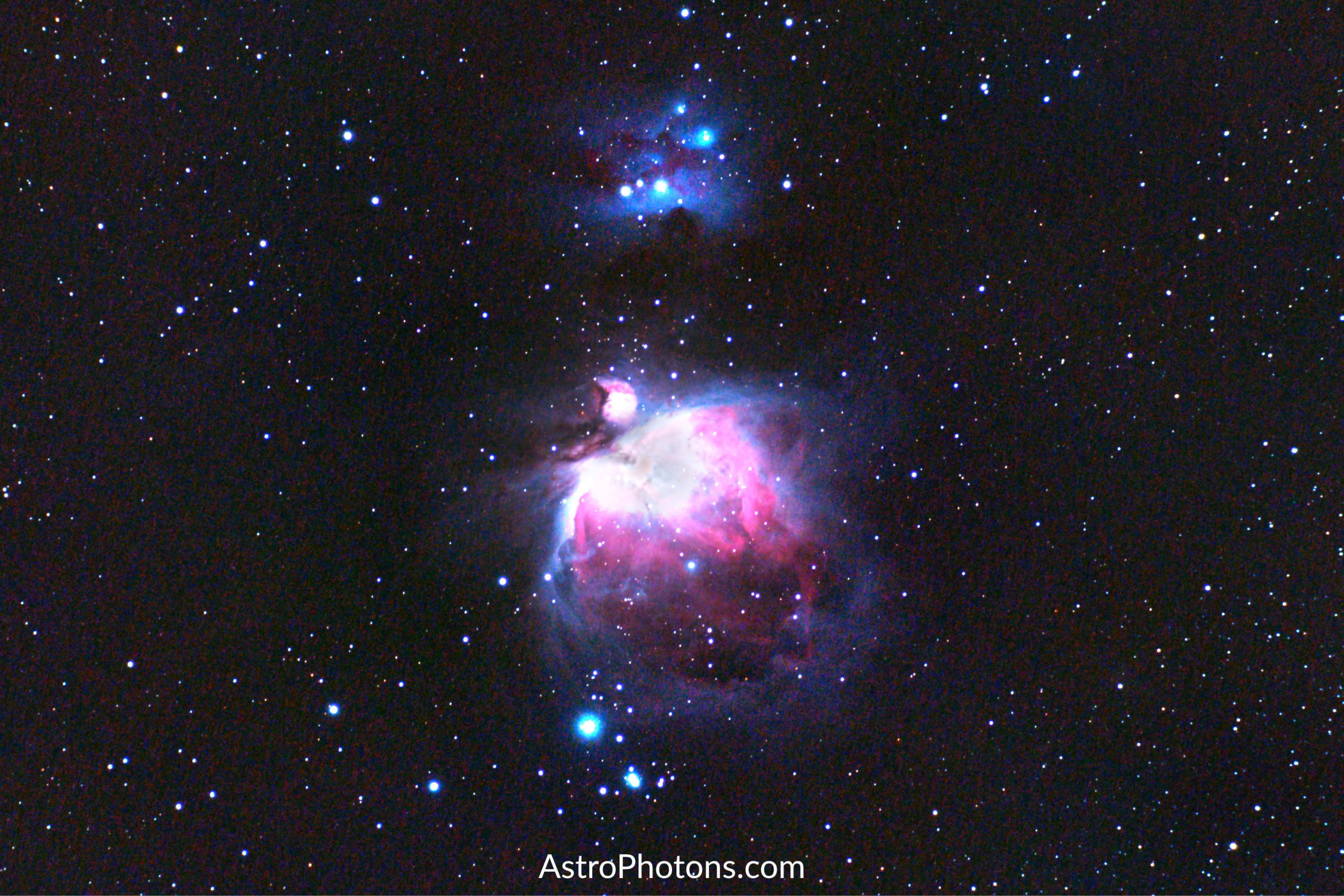
Below the Orion's Belt, there is another 3-stars-line pattern, the so-called Orion's Sword (and sometimes scabbard). It comprises three stars - 42 Orionis, Theta Orionis, and Iota Orionis - and M42, the Orion Nebula (and Running Man Nebula above).
Orion Nebula (M42/Messier 42)
Orion Nebula is one of the brightest nebulae on the night sky and can be easily seen with the naked eye (in a reasonably-dark place), and astronomy binoculars help even more to see it. It's one of the (if not the one) most often photographed objects in the astrophotography community due to its huge brightness. Besides that, it's just beautiful.
The Brightest Stars in Orion Constellation (in Order From the Brightest)
| Star | Bayer designation | Apparent magnitude | |
| 1. | Rigel | β/Beta Orionis | 0.18 |
| 2. | Betelgeuse | α/Alpha Orionis | 0.42 |
| 3. | Bellatrix | γ/Gamma Orionis | 1.64 |
| 4. | Alnilam | ε/Epsilon Orionis | 1.69 |
| 5. | Alnitak | ζ/Zeta Orionis | 1.88 |
| 6. | Saiph | κ/Kappa Orionis | 2.07 |
| 7. | Mintaka | δ/Delta Orionis | 2.20 |
| 8. | Meissa | λ/Lambda Orionis | 3.47 |
Orion Name Meaning in Greek Mythology
In Greek mythology, Orion was a Beockian giant, a hunter of great strength and beauty, son of Poseidon and Euryale (one of the three Gorgon sisters), or Hyrieus of Boeotia. As Polyphemus's brother, he was characterized by his enormous height (he could walk on the ocean floor with his head above the waves; according to another message, he could walk on the sea) and violent character.
Orion persecuted the nymphs Pleiades (heralds of good weather) and Hyades (heralds of bad weather) until they asked Zeus to turn them into animals. In fulfilling their wish, Zeus turned them into pigeons and later into a cluster of stars in the sky, today called the Pleiades.
After Orion's death, he was moved by the gods between the stars (the constellation of Orion).
In the play, Orion is depicted as a hunter with a shield in one hand, a machete in the other, and a sword at his waist. He defends himself against the charging Bull in the sky. The myth of Orion has inspired artists for centuries; it has become the subject of poetic and musical works and is also frequent in fine arts.
FAQ
Yes. Orion is one of the easiest constellations to see with the naked eye. Even from suburban areas with moderate light pollution, the three bright stars of Orion's Belt are usually clearly visible. In darker locations, observers can also notice the faint glow of the Orion Nebula beneath the belt. Binoculars or a small telescope will reveal much more detail, including star clusters and nebula structures.
Like all constellations, Orion appears to move across the sky because of Earth's rotation. During the night, it rises in the east, climbs higher toward the south, and eventually sets in the west. The stars themselves do not change position relative to each other, but the constellation's orientation may appear rotated depending on the time of night and the observer's latitude.
Betelgeuse, one of the brightest stars in Orion, is a red supergiant near the end of its life cycle and will eventually explode as a supernova. However, "soon" in astronomical terms could still mean tens of thousands of years. When it finally explodes, the event will likely be visible from Earth even during the daytime and could briefly become brighter than the Moon.
Orion contains several objects that are great targets for beginner astronomers. The most famous is the Orion Nebula (M42), visible with binoculars and small telescopes. Other accessible targets include M43, M78, and the Lambda Orionis star cluster. With larger telescopes or astrophotography equipment, observers can also capture more challenging objects like the Horsehead Nebula and Flame Nebula.
Orion is important because it contains many different types of astronomical objects in one region of the sky. Within its borders you can find massive supergiant stars, stellar nurseries like the Orion Nebula, and several famous nebulae used in astrophotography. Because of its brightness and distinctive shape, Orion is also often used as a reference constellation for learning how to navigate the night sky.


Simon says
All about orion in one place. Bierfly, to the point, with legible tables and photos. Good job Pawel.
Nigel says
Thanks Pawel, I agree with Simon. A really good and succinct overview.
Paweł Białecki says
Thanks!