
• Astronomy & Skywatching
  • Night Sky Objects
  • Space Facts
  • Astrophotography
  • About
menu icon
go to homepage
  • Astronomy & Skywatching
  • Night Sky Objects
  • Space Facts
  • Astrophotography
  • About

subscribe
search icon
Homepage link
  • Astronomy & Skywatching
  • Night Sky Objects
  • Space Facts
  • Astrophotography
  • About

×
Home » Astrophotography

Dumbbell Nebula (M27): How to Photograph with a DSLR Camera

Published: Sep 19, 2020 · Last update: Jan 19, 2022 · Author: Paweł Białecki · 1 Comment

Dumbbell Nebula (Messier 27) is a planetary nebula located in the constellation Vulpecula, and it's a popular Summer/Fall Astrophotography target due to its attractive visual look and high position on the night sky. In this article, you will find pure facts about the nebula, and useful beginner astrophotography tips to photograph it with a DSLR camera and a small APO refractor telescope. Let's get started! Full targets list.
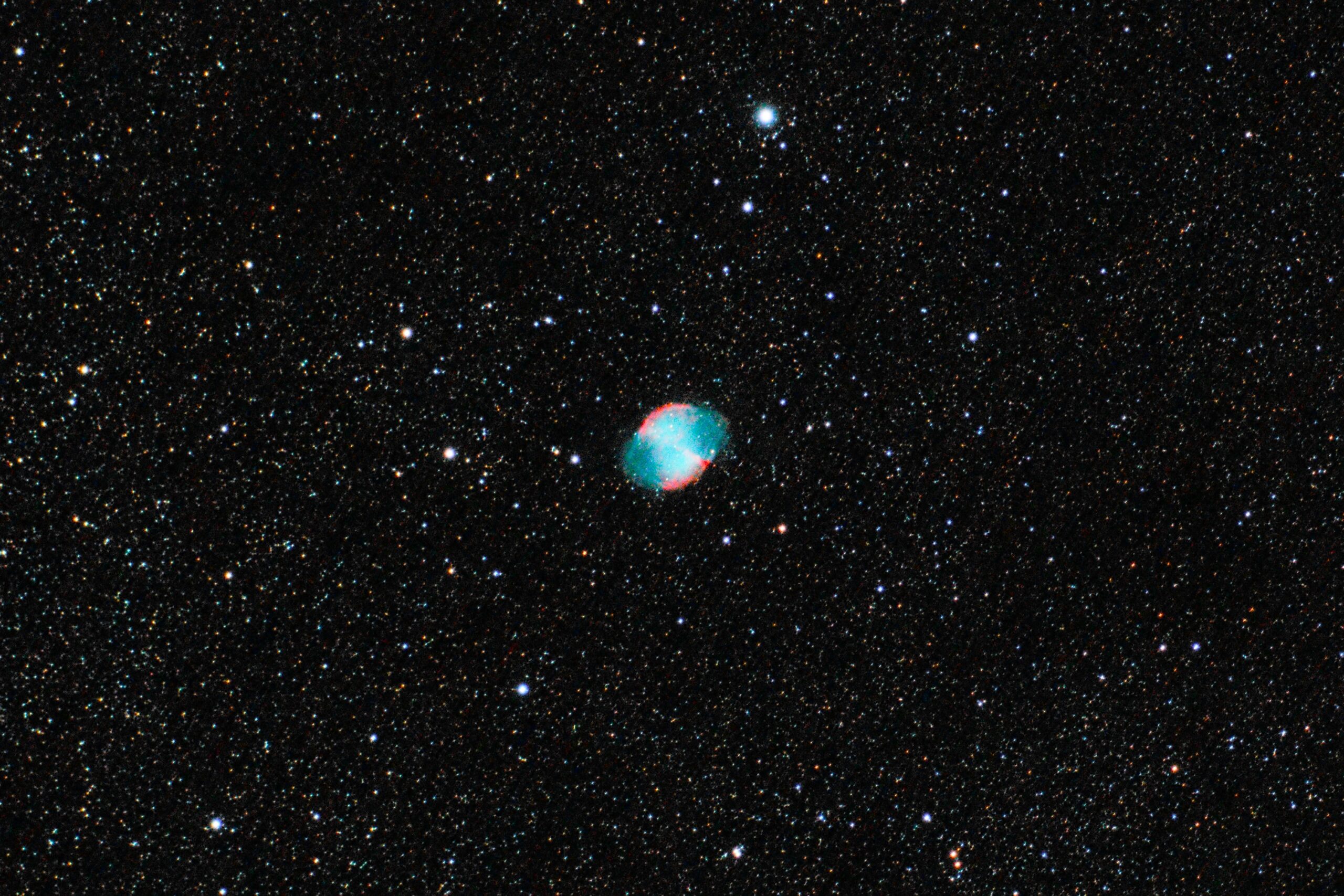
Dumbbell Nebula (M27)
My final 2020 season picture of the Dumbell Nebula (M27).
Jump to:
  • Dumbbell Nebula Facts
  • Dumbbell Nebula Astrophotography Tips
  • My Astrophotography Setup for the Dumbbell Nebula
  • 💬 Comments

Dumbbell Nebula Facts

ObjectDumbbell Nebula
Object typePlanetary nebula
Other namesM27, Messier 27, NGC 6853, Apple Core Nebula
ConstellationVulpecula
RA (right ascension)19h 59m 36s
DEC (declination)+22° 43′ 16″
Magnitude7.3
Size8 × 7 arcmin

Dumbbell Nebula Astrophotography Tips

Astrograph Selection

Use a telescope or a big telephoto lens (at least 400mm - my Rokinon 135mm f/2.0 was not zooming enough to capture details of this nebula; I used my Sky-Watcher Evostar 72ED) - no widefield, no standard, and no short telephoto lenses here. This target is small (apparent size 8 x 7 arcmins), so you want to really zoom it. An equatorial mount/star tracker is also required on targets this size.

Light Pollution

If you are photographing from a light-polluted backyard located in a city center, make sure to use a light pollution filter. This nebula is not a very bright target (apparent magnitude 7.3), so every hack to improve SNR (signal-to-noise) ratio is important. I used my Orion SkyGlow Imaging Filter.

Post-Processing

A standard OSC (DSLR/mirrorless) post-processing technique works well for this target. Make sure to stack a lot of subframes (single pictures) to reduce noise and improve the signal-to-noise ratio. This is even more important for this target, as it's not as bright as the Andromeda Galaxy, Pleiades, or North America Nebula. In my case, PixInsight's Background Extraction process was really useful to remove light-pollution gradients from the stacked image. Play with curves to improve contrast and saturation.

My Astrophotography Setup for the Dumbbell Nebula

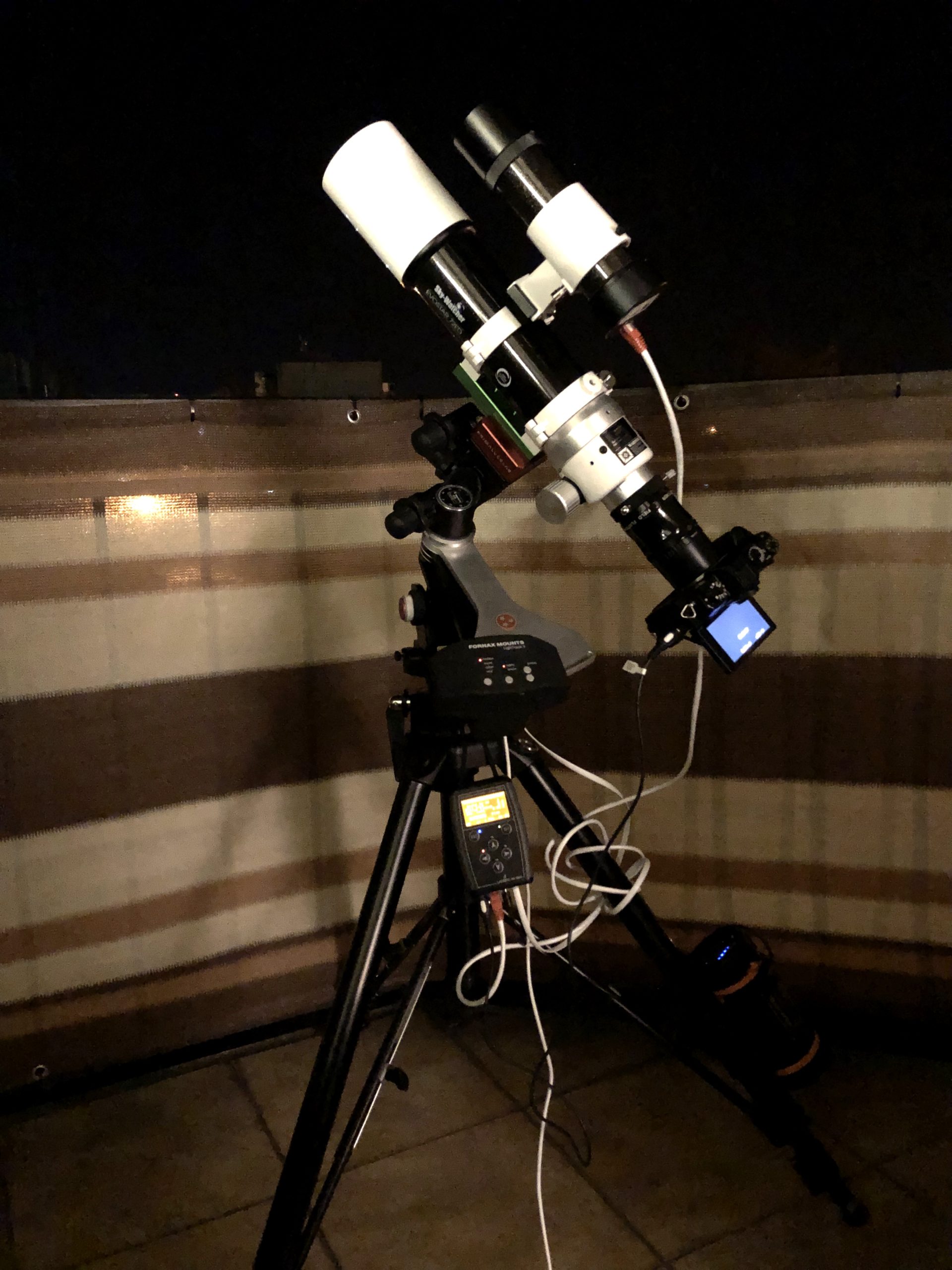
To capture this photo, I used my standard, portable telescope setup:

TelescopeSky-Watcher Evostar 72ED
CameraFujifilm X-T20
Star trackerFornax Lightrack II
Light pollution filterOrion SkyGlow Astrophotography Filter
SkyWatcher Evostar 72ED astrophotography setup

More info on NASA site

Download Free eBook Now

Discover Beginner Stargazing Tips that make the night sky simple and exciting.

We won't send you spam. Unsubscribe at any time.
Invalid email address
🚀 Almost done! Just click the confirmation link in your inbox and unlock your free PDF instantly.

More Astrophotography

  • astrophotography acronyms dictionary. Overhead view of astrophotography gear on a dark starry background, including telescope, filters, guide camera, and red flashlight. flat lay of astrophotography equipment on dark starry background, labeled items like telescope, filter wheel, guide camera, star chart, red flashlight, clean overhead view, no text, high detail, night sky theme
    Astrophotography Acronyms: A to Z Astro Imaging Dictionary
  • Astrophotography Targets by Month Full List
    Astrophotography Targets by Month - Best List for Beginners
  • Fall Astrophotography: The 7 Best Autumn Targets for Beginners
  • 10 Best Astrophotography Tips for Beginners - Proven and Instant

Comments

  1. Théodore ECONOMOU says

    December 06, 2020 at 2:59 pm

    Hello, the many links and tutorials linking to the Fornax mount seem to have disappeared from your web site. Could you please bring them back. Thank you

    Reply

Leave a Reply Cancel reply

Your email address will not be published. Required fields are marked *

Paweł Białecki, the author behind Astro Photons
Paweł Białecki

I'm Paweł Białecki - an astrophotographer and indie app developer who's been exploring the night sky for over a decade. Here on Astro Photons, I share practical guides, cosmic insights, and deep-sky photos to help you enjoy and understand our universe - no telescope degree required.

This blog is part of my personal mission to make astronomy more approachable. I write for beginners, hobbyists, and curious stargazers who want real, useful advice - not just textbook definitions. All guides are based on hands-on experience, actual night sky photography, and a genuine love for the cosmos.

More about me →

Free Astronomy Ebooks

Discover the night sky with my beginner-friendly guides. Written from 10+ years of skywatching and astrophotography experience.

  • Discover 7 Constellations Every Stargazer Should Know - Free eBook download
    7 Constellations Everyone Should Recognize - Free eBook
  • Free ebook for beginner stargazers! Discover 10 simple tips to enjoy the night sky without expensive gear. Download your free astronomy guide today.
    Beginner Stargazing Tips - Free Ebook With 10 Simple Tricks
  • 100 Space Facts That Will Blow Your Mind - Free Ebook
    100 Space Facts That Will Blow Your Mind - Free Ebook

Written by Paweł Białecki - astronomy blogger & astrophotographer since 2018.

As seen in:

Footer

↑ back to top

About

  • Author - Paweł Białecki
  • Astrophotography Gallery
  • Terms and Conditions
  • Legal, Privacy Policy, Cookies

Contact

  • Contact


© 2017–2025 Paweł Białecki · Astro Photons. This site uses cookies. By continuing to browse, you accept our use of cookies. Some articles may contain affiliate links. As an Amazon Associate, I earn from qualifying purchases. Sponsored content may also appear from time to time. Astro Photons is owned and operated by Paweł Białecki, os. Orła Białego 48, 59-920 Bogatynia, Poland, EU. Apple and App Store are trademarks of Apple Inc. Other names may be trademarks of their respective owners.

x
Get Free October 2025 Astronomical Events Calendar


Download your free one-page printable PDF guide for October 2025. Discover the Moon phases, visible planets, meteor showers, and key sky events - all in one simple astronomy calendar.

Join our subscribers who get content directly to their inbox.
Invalid email address
🚀 Almost done! Just click the confirmation link in your inbox and unlock your free PDF instantly.
x
Leaving without knowing what to see tonight?

Don't miss the top stargazing sights. One free email each week with planets, stars & sky events.

Join our subscribers who get content directly to their inbox.
Invalid email address
🚀 Almost there! Check your inbox and click the confirmation link to start getting your weekly sky guide.