
• Astronomy & Skywatching
  • Night Sky Objects
  • Space Facts
  • Astrophotography
  • About
menu icon
go to homepage
  • Astronomy & Skywatching
  • Night Sky Objects
  • Space Facts
  • Astrophotography
  • About

subscribe
search icon
Homepage link
  • Astronomy & Skywatching
  • Night Sky Objects
  • Space Facts
  • Astrophotography
  • About

×
Home » Astrophotography

Starry Sky Stacker Tutorial - Astrophotography Stacking on MacOS

Published: Feb 19, 2019 · Last update: Oct 3, 2025 · Author: Paweł Białecki · Leave a Comment

Stacking your astrophotography pictures is crucial to eliminate noise and reveal hidden details. But unfortunately, one of the most popular software for stacking, the Deep Sky Stacker, is unavailable for macOS (the former Mac OS X). Should we, the Mac users, be sad because of this? Well, maybe, but we are certainly not lost. Other programs can do the job, just like the Deep Sky Stacker, or even better. In this post, I will show you one of the best astrophotography stacking software options for macOS - the Starry Sky Stacker.

Jump to:
  • What is Stacking in Astrophotography
  • Why Should you Stack your Astrophotography Pictures?
  • What is Starry Sky Stacker
  • How to use Starry Sky Stacker
  • Final Image
  • References
  • FAQ
  • Learn More
  • 💬 Comments

What is Stacking in Astrophotography

In astrophotography, stacking is a process of combining multiple exposures (all with the same settings - ISO, exposure time, aperture, etc.) into one so-called stack. In the stacking process, every pixel in the final stack image is created by averaging pixels from the proper places from so-called subs - single exposures, often called light frames. As a result, the stack has the exact pixel resolution, and before further post-processing, it looks almost the same as every single exposure it has been produced of.
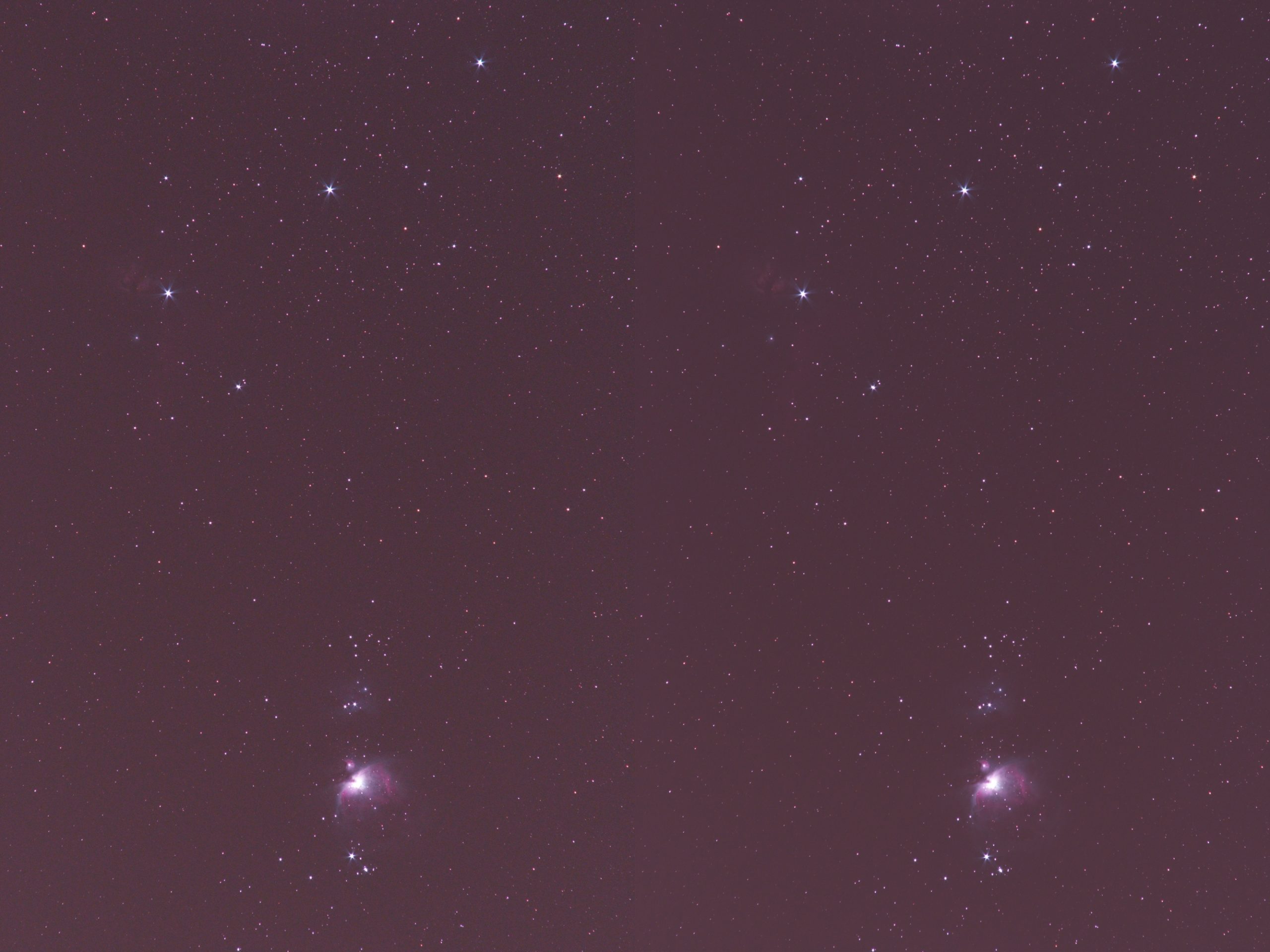
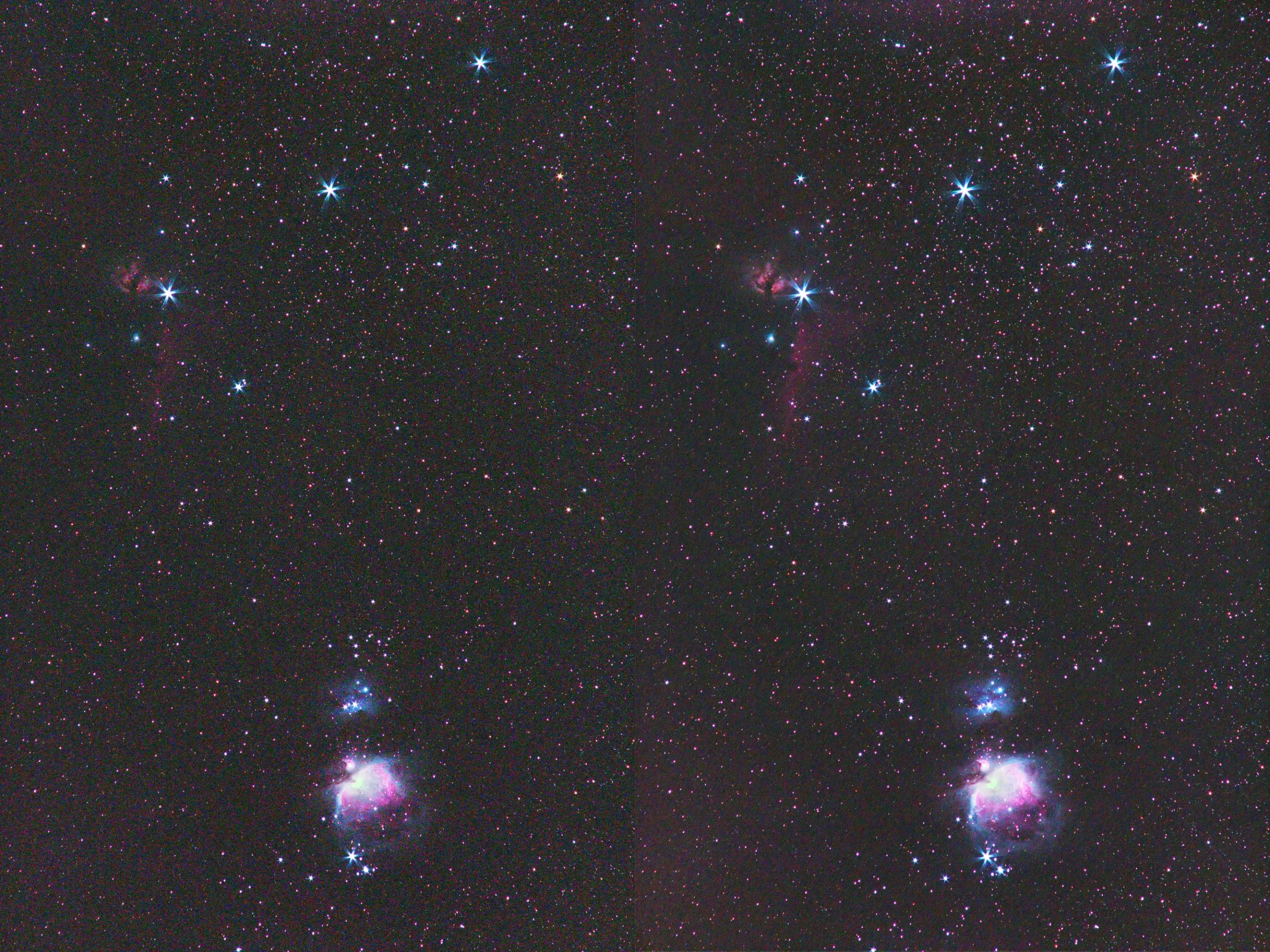
These are two different images. On the left, there is a single light frame of the Orion region, unmodified in any way, straight from the camera (Fuji X-T20). On the right, there is a stack composed of seven light frames (this one on the left included) with the Starry Sky Stacker. Not much visible difference for now.

Why Should you Stack your Astrophotography Pictures?

It would be best if you stacked your multiple astrophotography pictures into one to improve the signal-to-noise ratio, which leads to removing unwanted camera sensor noise and revealing faint details on your images. Stacking is the foundation of a successful astro picture, and it's the first thing you should learn when you start doing astrophotography post-processing.

Single Exposure vs. Stacked Image

Exact pictures stretched and post-processed in PixInsight and Affinity Photo (best effort processing both). The Flame and Horsehead nebulae start to appear (the top-left corner), and the image on the right is a stack composed of only seven light frames. The recommended minimum to get an adorable astro picture is 20 - but the more, the better.

What is Starry Sky Stacker

Starry Sky Stacker is an astrophotography stacking app for macOS written by Ralph Hill. It has multiple functions for creating good quality stacks for further processing:

  • Combining single exposures using different algorithms (you can choose which one you want to use) - median, mean, max, or min.
  • Aligning your subs if they were not tracked accurately.
  • Estimating the quality of your subs and letting you decide which ones to use for the final stack integration.
  • Optionally using also dark and flat frames.

How to use Starry Sky Stacker

Prepare your TIFF Subs

Always use RAW as your camera format, not JPG. JPG is a lossy file format and doesn't preserve all that data that came from the night sky, and your goal is to reveal as many details as possible on your final image. To do that, always shoot and process your pictures in RAW or other lossless formats (like TIFF or FIT).

Starry Sky Stacker uses the TIFF file format for internal processing. Therefore, it's best to export your RAWs to TIFF with default values using some RAW processing software (like Capture One).

Load your Subs into Starry Sky Stacker

Select your subs and load them into the program. If you want to use darks or/and flats, check the "show image classification" tick. If you have only light frames, then leave them unchecked. After a few seconds (depending on the number of your subs and the power of your machine, it may be longer), you will see a screen like this one below. You can exclude some worse subframes (with passing clouds, e.g.), and after that, click "Composite."
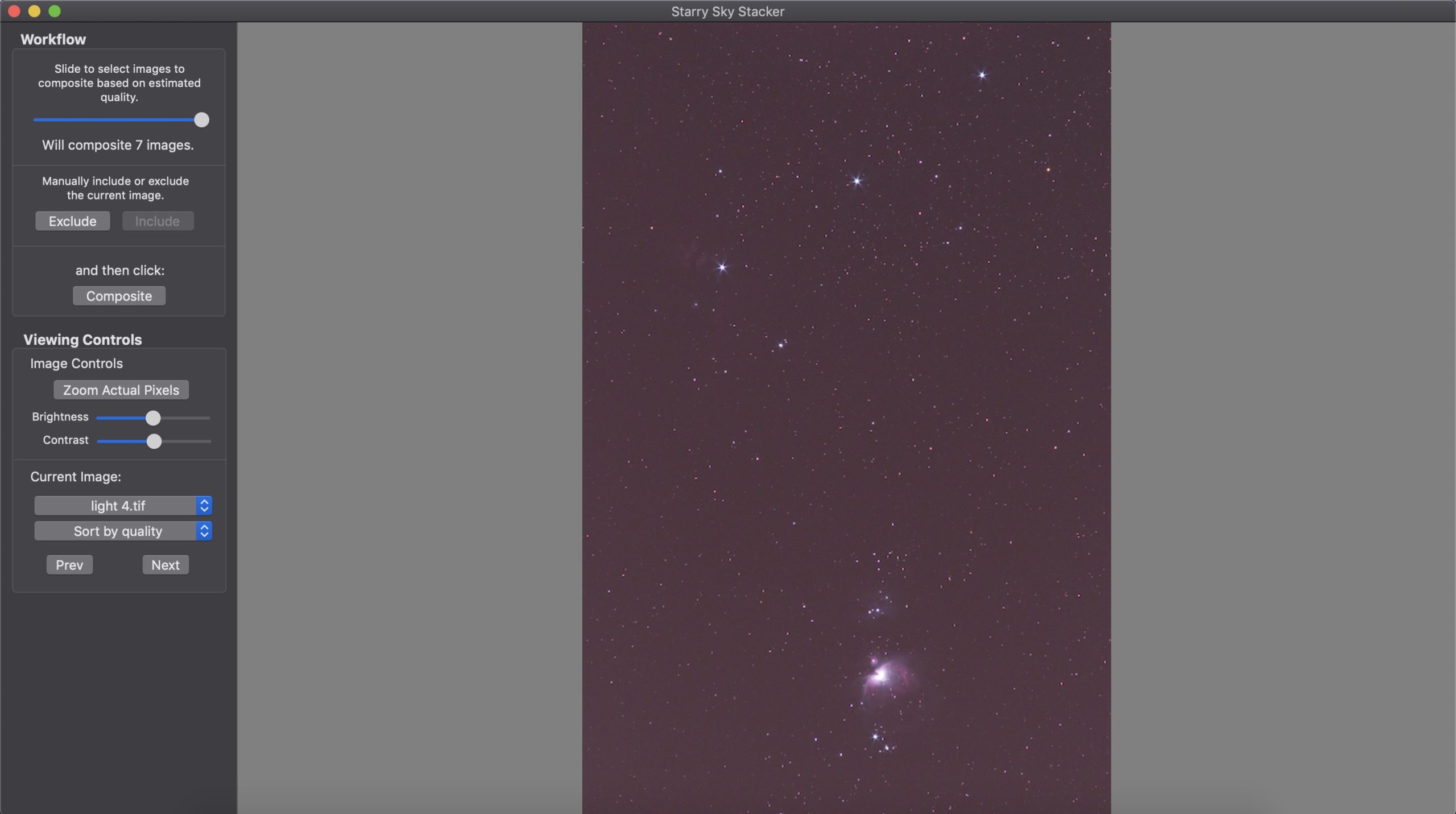
Single exposures loaded into Starry Sky Stacker
Single exposures loaded into Starry Sky Stacker.

Tweak Composition Details

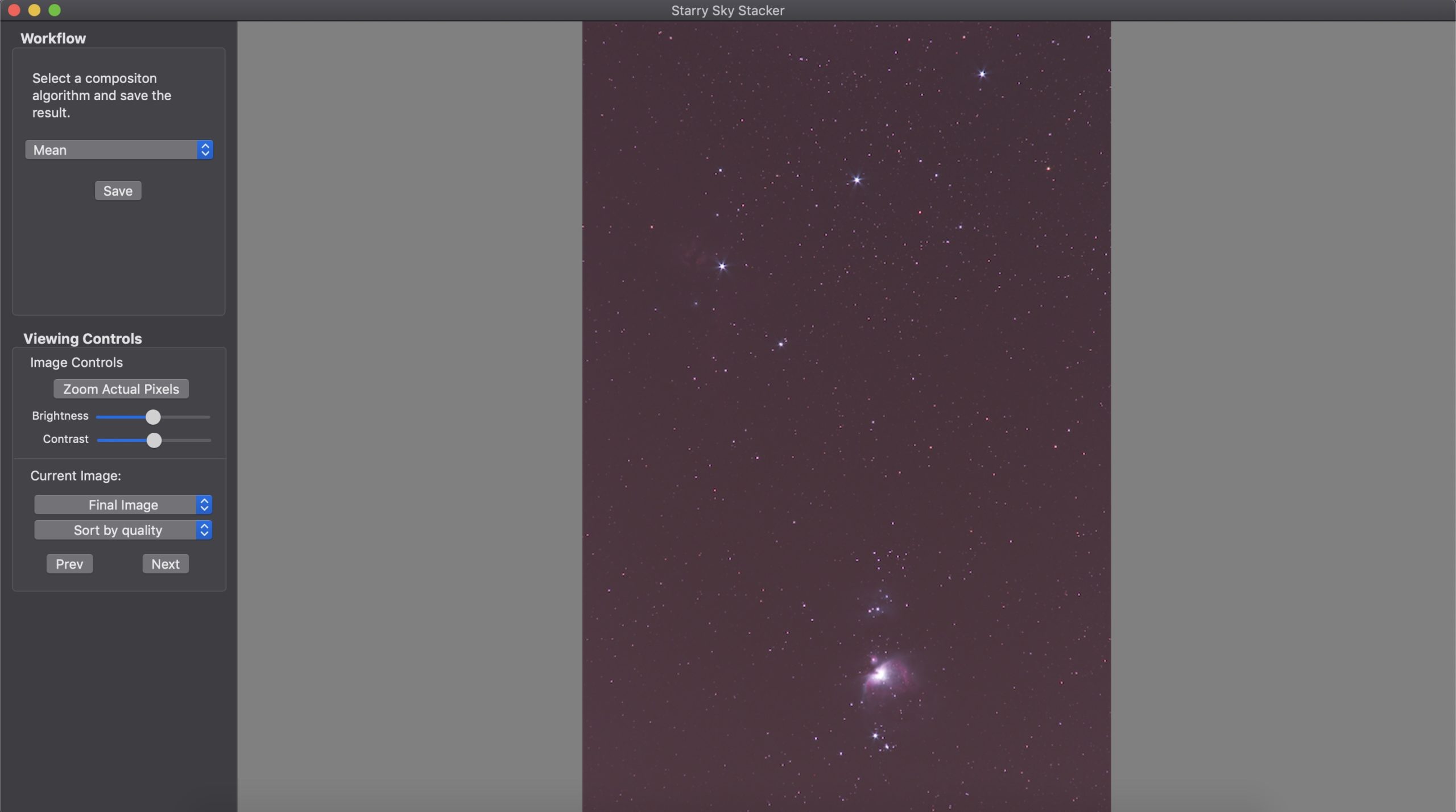
A composited stack image Starry Sky Stacker
Your stack is almost ready.

Images are aligned. Now you have to select the composition algorithm and optionally play with brightness and contrast settings. I usually use the median algorithm and leave brightness and contrast settings default (I do that kind of further post-processing in PixInsight and Affinity Photo later). Finally, click "Save" and choose your drive's final stacked picture location. Your stack is ready for post-processing!

Final Image
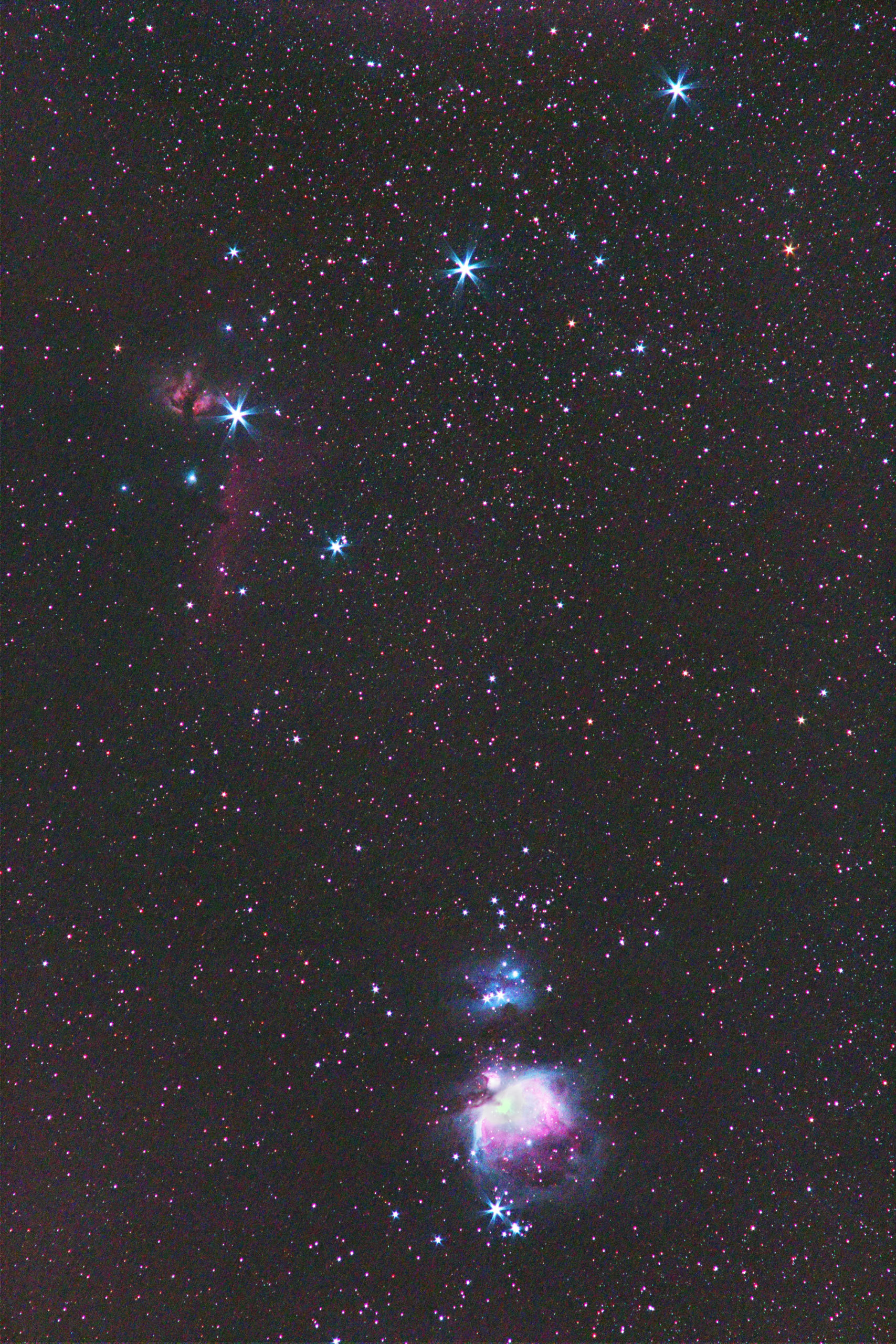
On an APS-C sensor, the Orion, Running Man, Flame, and Horsehead nebulae at 200mm focal length.

References

Starry Sky Stacker

Official developer page

Watch the Starry Sky Stacker developer's introduction to the program.

Other Stacking Software Options for macOS

PixInsight

FAQ

What is Starry Sky Stacker?

Starry Sky Stacker is astrophotography stacking app for macOS written by Ralph Hill. It has multiple functions for creating high-quality stack images for further astrophotography processing.
Learn More

Astrophotography for Beginners: How to Start. Learn the Basics!
The Best Astrophotography Telescope for Beginners 🔭
Andromeda Galaxy (M31): How to Photograph with a DSLR Camera
10 Best Astrophotography Tips for Beginners - Proven and Instant
Download Free eBook Now

Discover Beginner Stargazing Tips that make the night sky simple and exciting.

We won't send you spam. Unsubscribe at any time.
Invalid email address
🚀 Almost done! Just click the confirmation link in your inbox and unlock your free PDF instantly.

More Astrophotography

  • astrophotography acronyms dictionary. Overhead view of astrophotography gear on a dark starry background, including telescope, filters, guide camera, and red flashlight. flat lay of astrophotography equipment on dark starry background, labeled items like telescope, filter wheel, guide camera, star chart, red flashlight, clean overhead view, no text, high detail, night sky theme
    Astrophotography Acronyms: A to Z Astro Imaging Dictionary
  • Astrophotography Targets by Month Full List
    Astrophotography Targets by Month - Best List for Beginners
  • Fall Astrophotography: The 7 Best Autumn Targets for Beginners
  • Dumbbell Nebula (M27): How to Photograph with a DSLR Camera

Comments

No Comments

Leave a Reply Cancel reply

Your email address will not be published. Required fields are marked *

Paweł Białecki, the author behind Astro Photons
Paweł Białecki

I'm Paweł Białecki - an astrophotographer and indie app developer who's been exploring the night sky for over a decade. Here on Astro Photons, I share practical guides, cosmic insights, and deep-sky photos to help you enjoy and understand our universe - no telescope degree required.

This blog is part of my personal mission to make astronomy more approachable. I write for beginners, hobbyists, and curious stargazers who want real, useful advice - not just textbook definitions. All guides are based on hands-on experience, actual night sky photography, and a genuine love for the cosmos.

Outside of astronomy, I also build digital tools and educational projects in other areas. One of them is System Formy - a Polish-language project focused on practical nutrition and realistic fitness for busy adults. Just like in astronomy, my goal is to simplify complex topics and turn them into clear, usable systems people can apply in everyday life.

More about me →

Free Astronomy Ebooks

Discover the night sky with my beginner-friendly guides. Written from 10+ years of skywatching and astrophotography experience.

  • Discover 7 Constellations Every Stargazer Should Know - Free eBook download
    7 Constellations Everyone Should Recognize - Free eBook
  • Free ebook for beginner stargazers! Discover 10 simple tips to enjoy the night sky without expensive gear. Download your free astronomy guide today.
    Beginner Stargazing Tips - Free Ebook With 10 Simple Tricks
  • 100 Space Facts That Will Blow Your Mind - Free Ebook
    100 Space Facts That Will Blow Your Mind - Free Ebook

Written by Paweł Białecki - astronomy blogger & astrophotographer since 2018.

As seen in:

Footer

↑ back to top

About

  • Author - Paweł Białecki
  • Astrophotography Gallery
  • Terms and Conditions
  • Legal, Privacy Policy, Cookies

Contact

  • Contact


© 2017–2025 Paweł Białecki · Astro Photons. This site uses cookies. By continuing to browse, you accept our use of cookies. Some articles may contain affiliate links. As an Amazon Associate, I earn from qualifying purchases. Sponsored content may also appear from time to time. Astro Photons is owned and operated by Paweł Białecki, os. Orła Białego 48, 59-920 Bogatynia, Poland, EU. Apple and App Store are trademarks of Apple Inc. Other names may be trademarks of their respective owners.

x
Get Free October 2025 Astronomical Events Calendar


Download your free one-page printable PDF guide for October 2025. Discover the Moon phases, visible planets, meteor showers, and key sky events - all in one simple astronomy calendar.

Join our subscribers who get content directly to their inbox.
Invalid email address
🚀 Almost done! Just click the confirmation link in your inbox and unlock your free PDF instantly.
x
Leaving without knowing what to see tonight?

Don't miss the top stargazing sights. One free email each week with planets, stars & sky events.

Join our subscribers who get content directly to their inbox.
Invalid email address
🚀 Almost there! Check your inbox and click the confirmation link to start getting your weekly sky guide.